
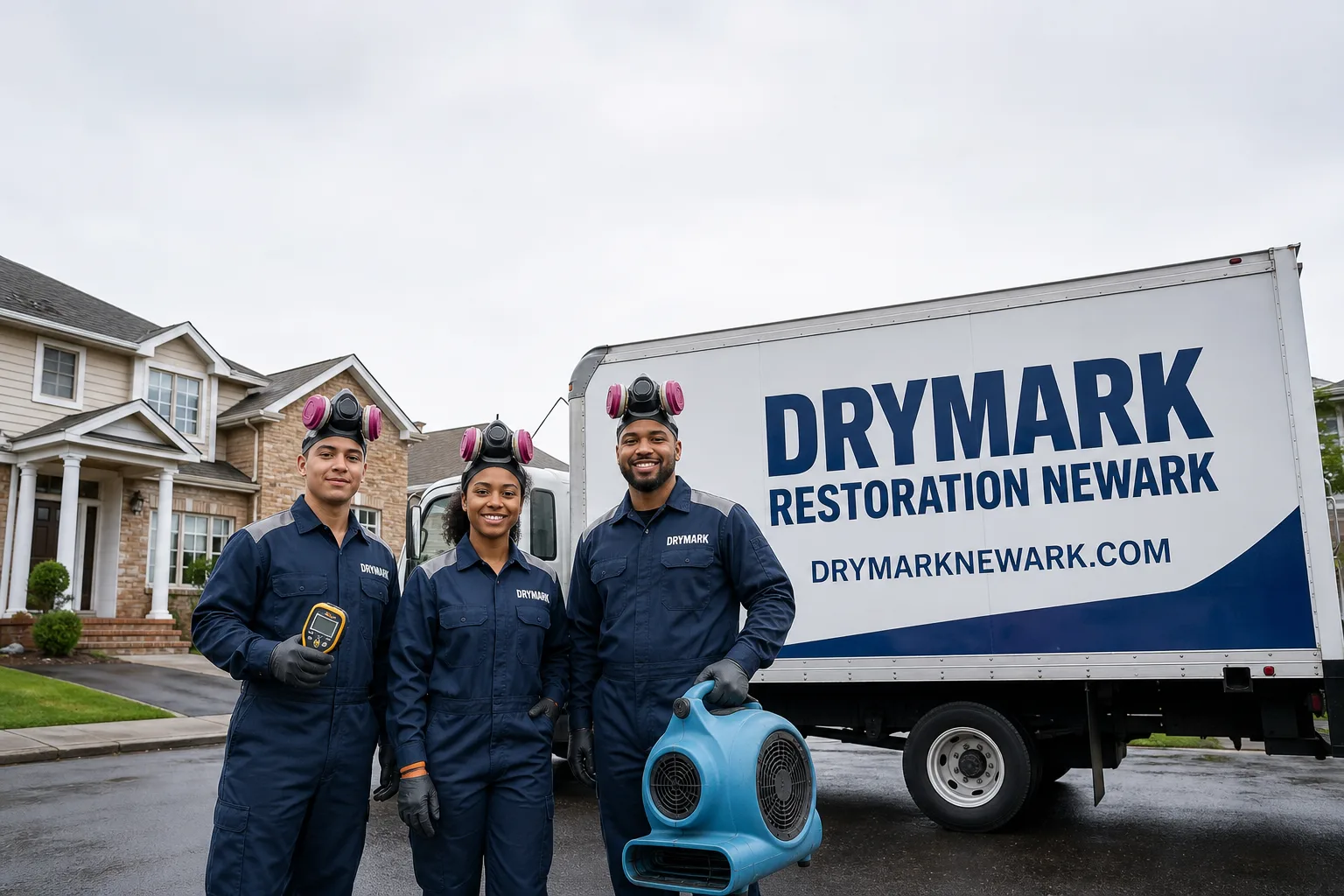
Free visual inspection and a written scope of work before any mitigation begins - photos, moisture readings, and drying logs go in your claim file
The scope we write is the scope we bill. Anything new gets shown to you, in writing, before we touch it.
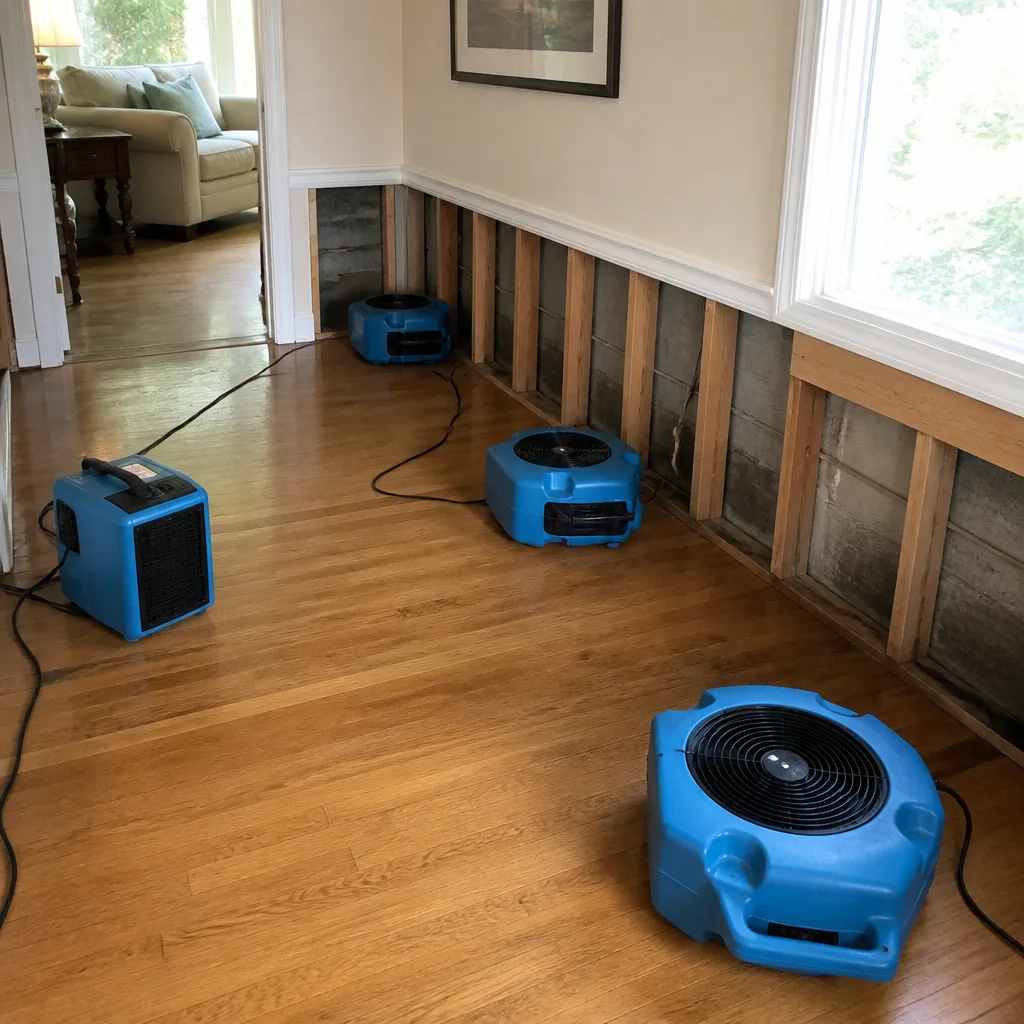
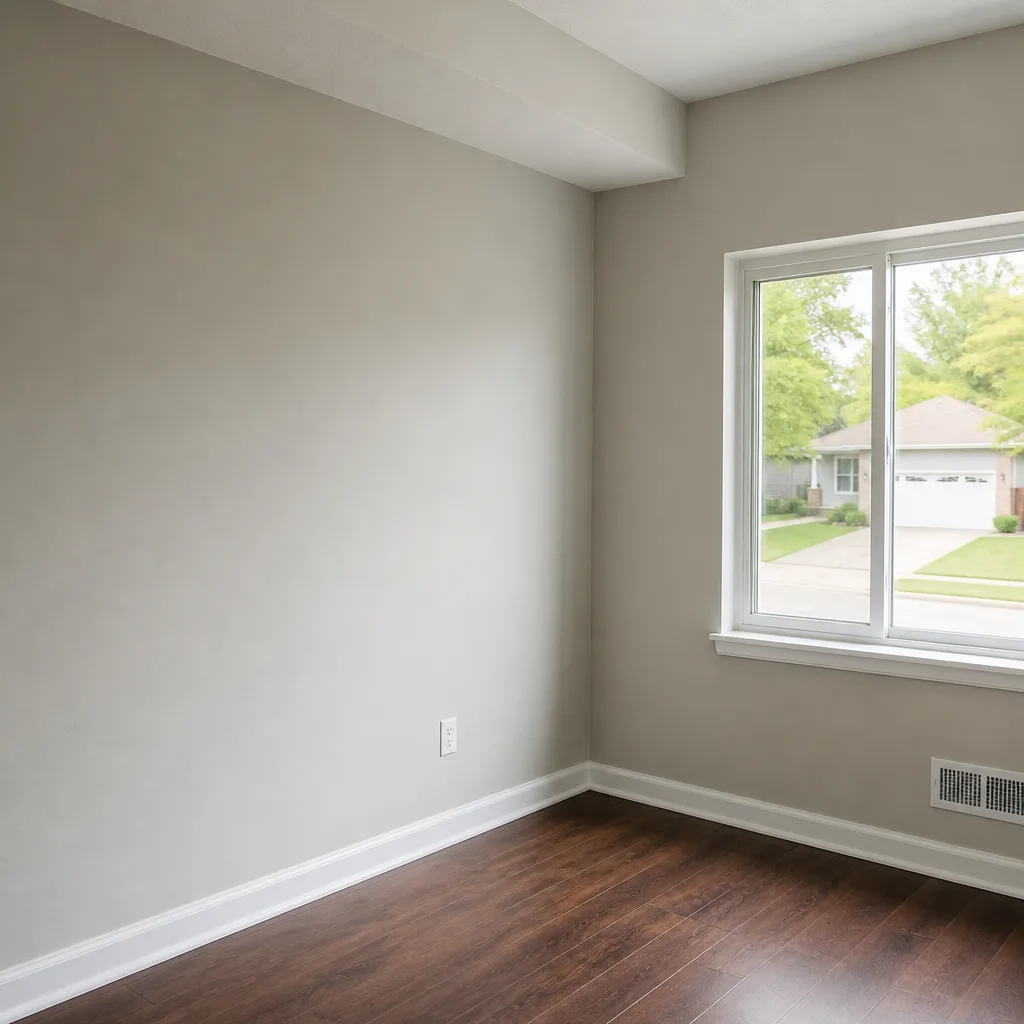
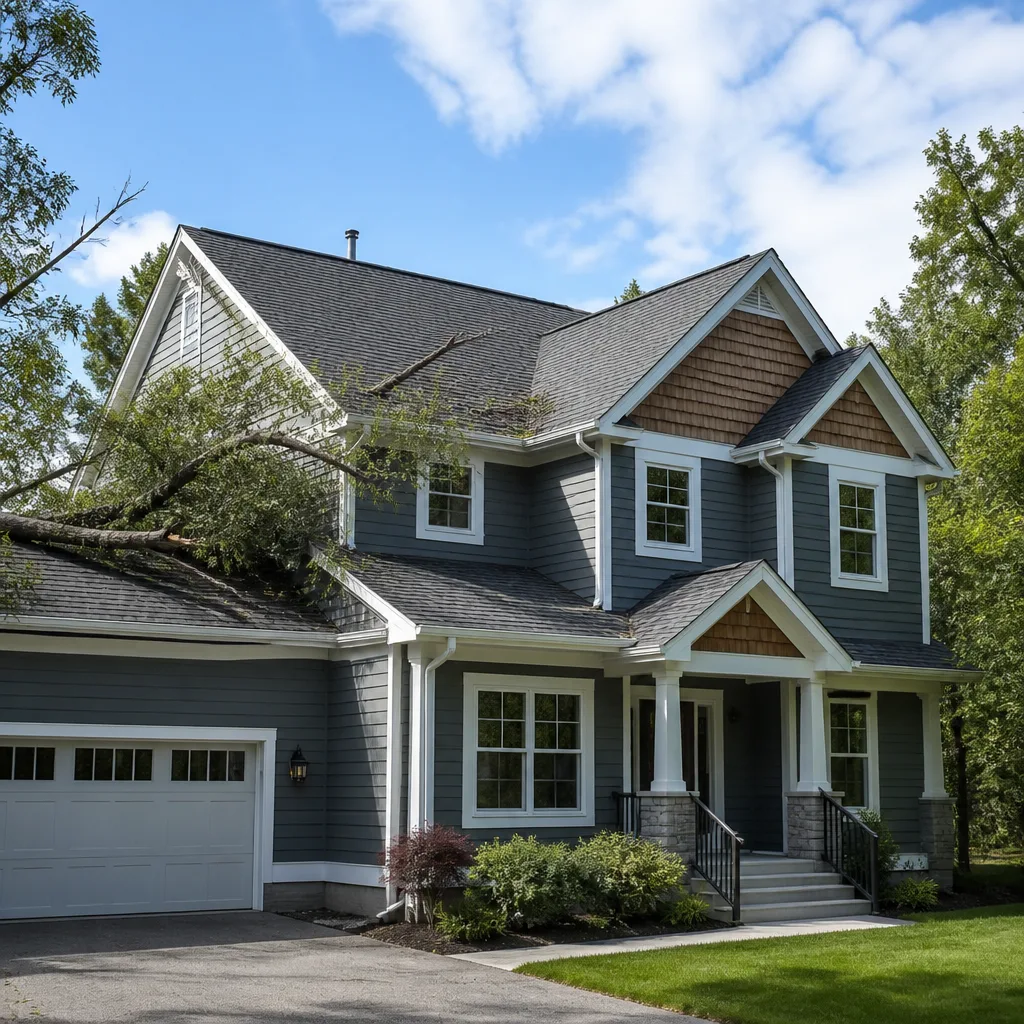
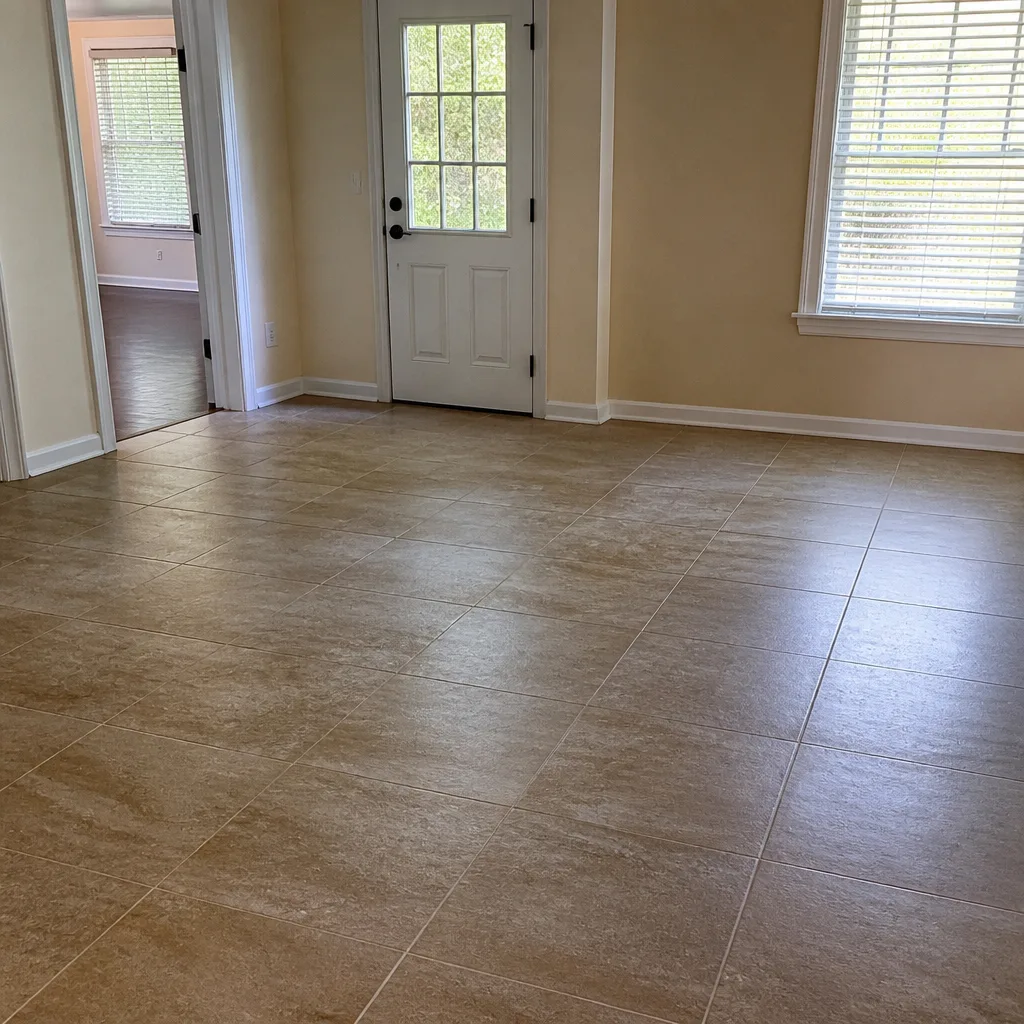
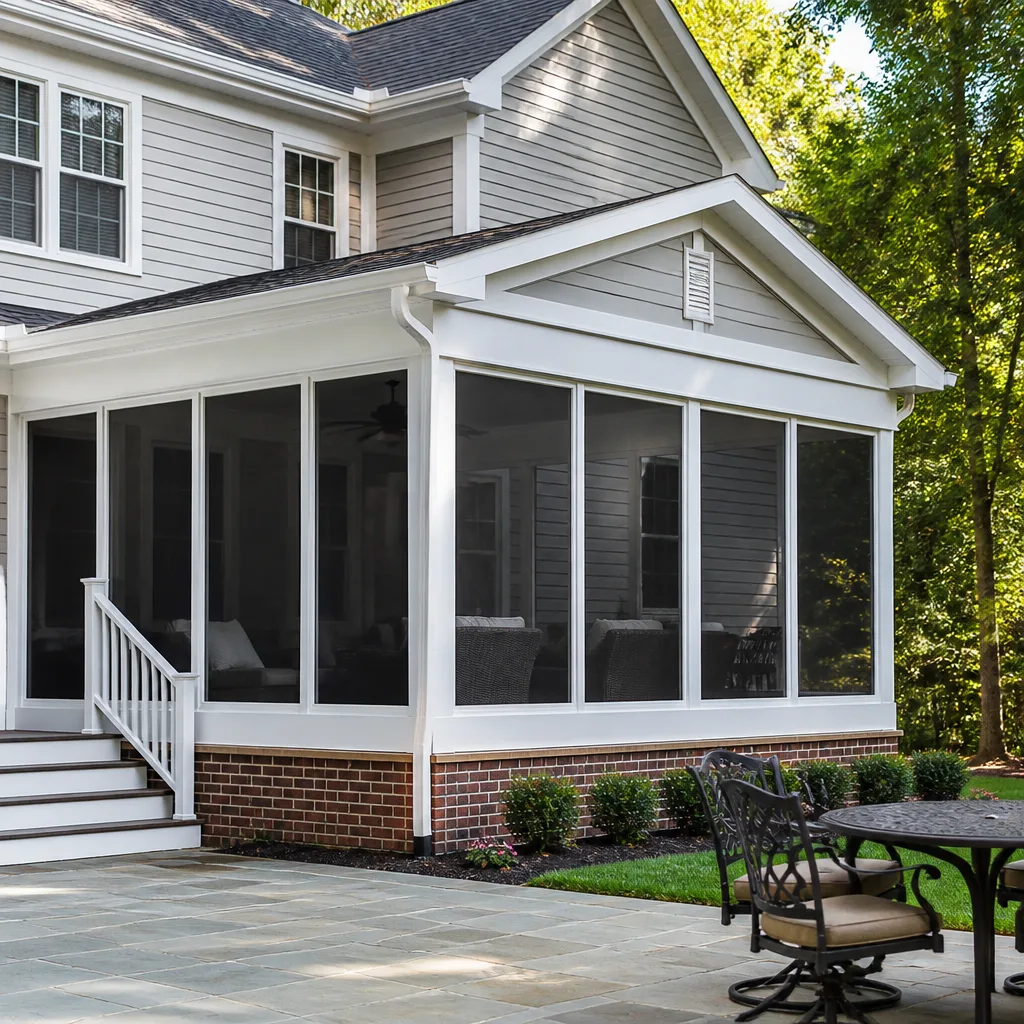
 Before
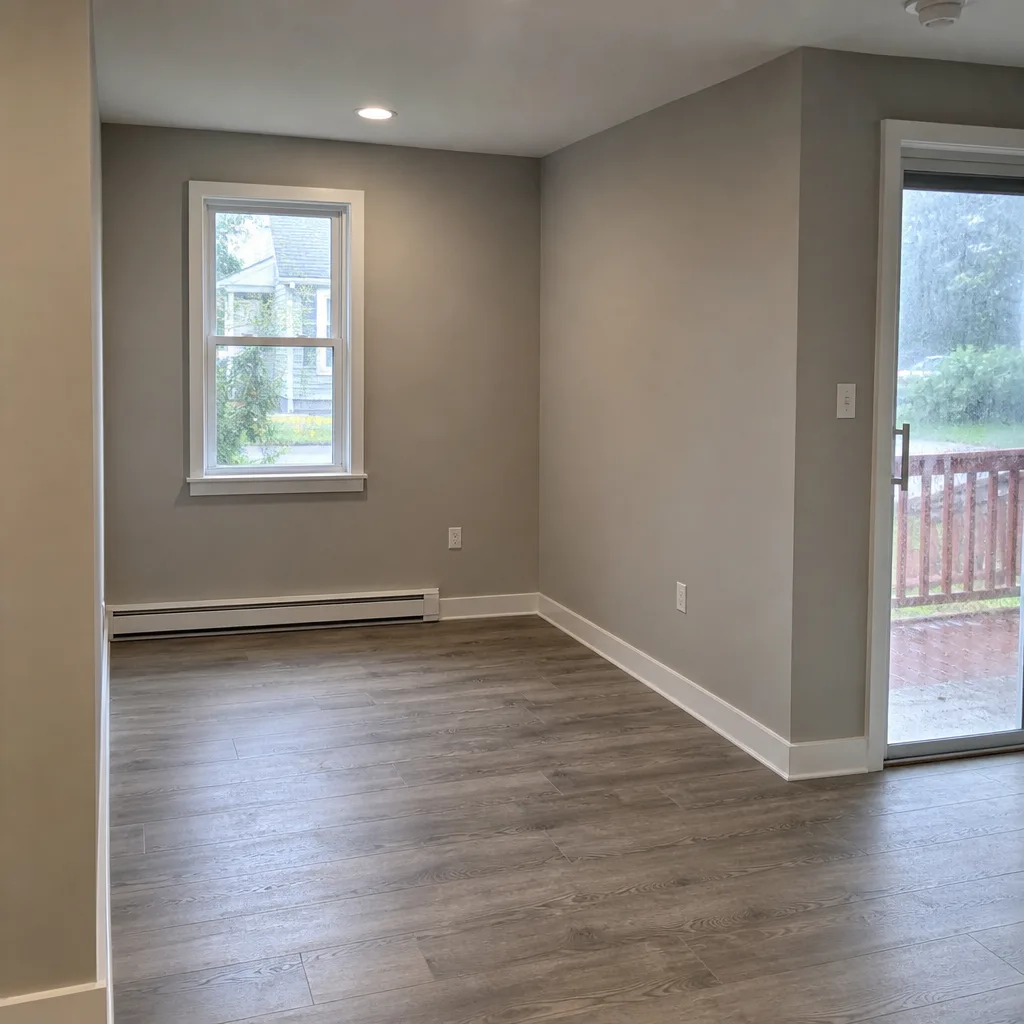 After
After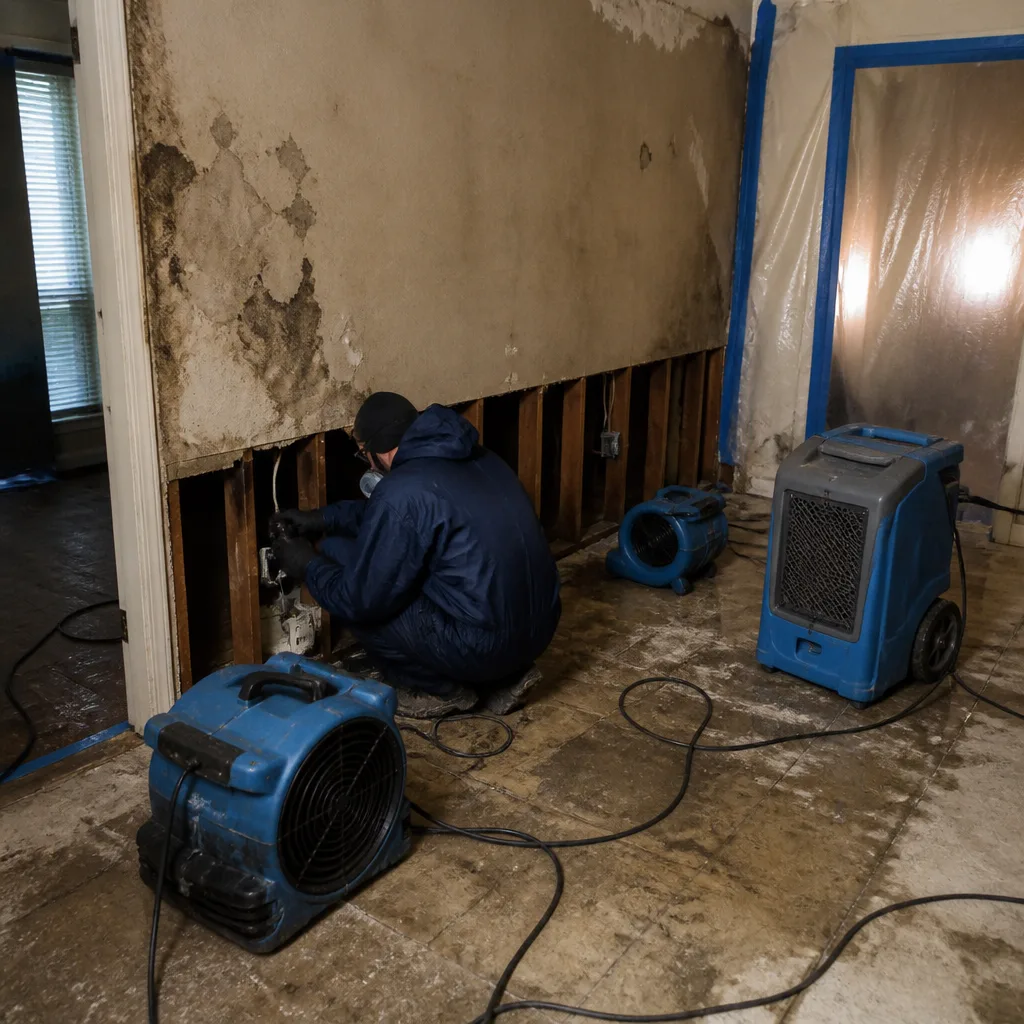 Before
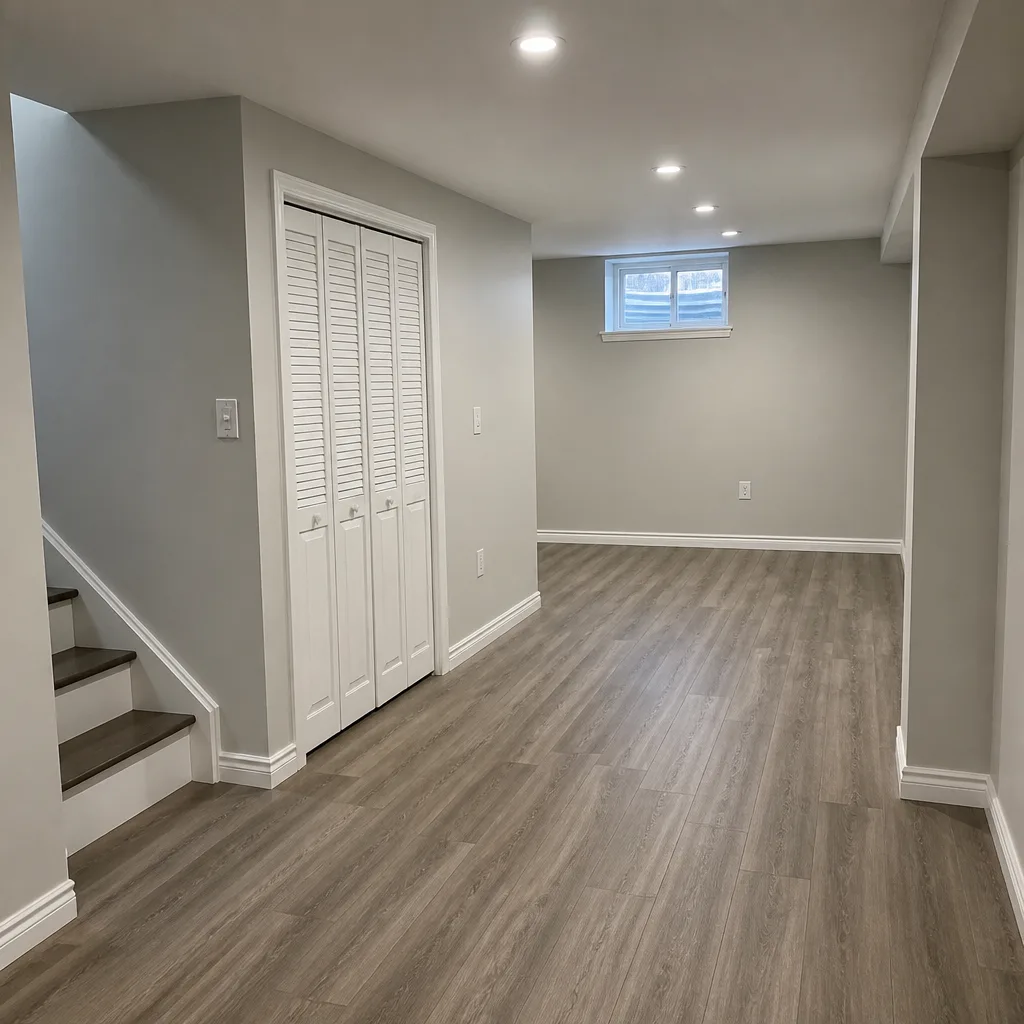 After
After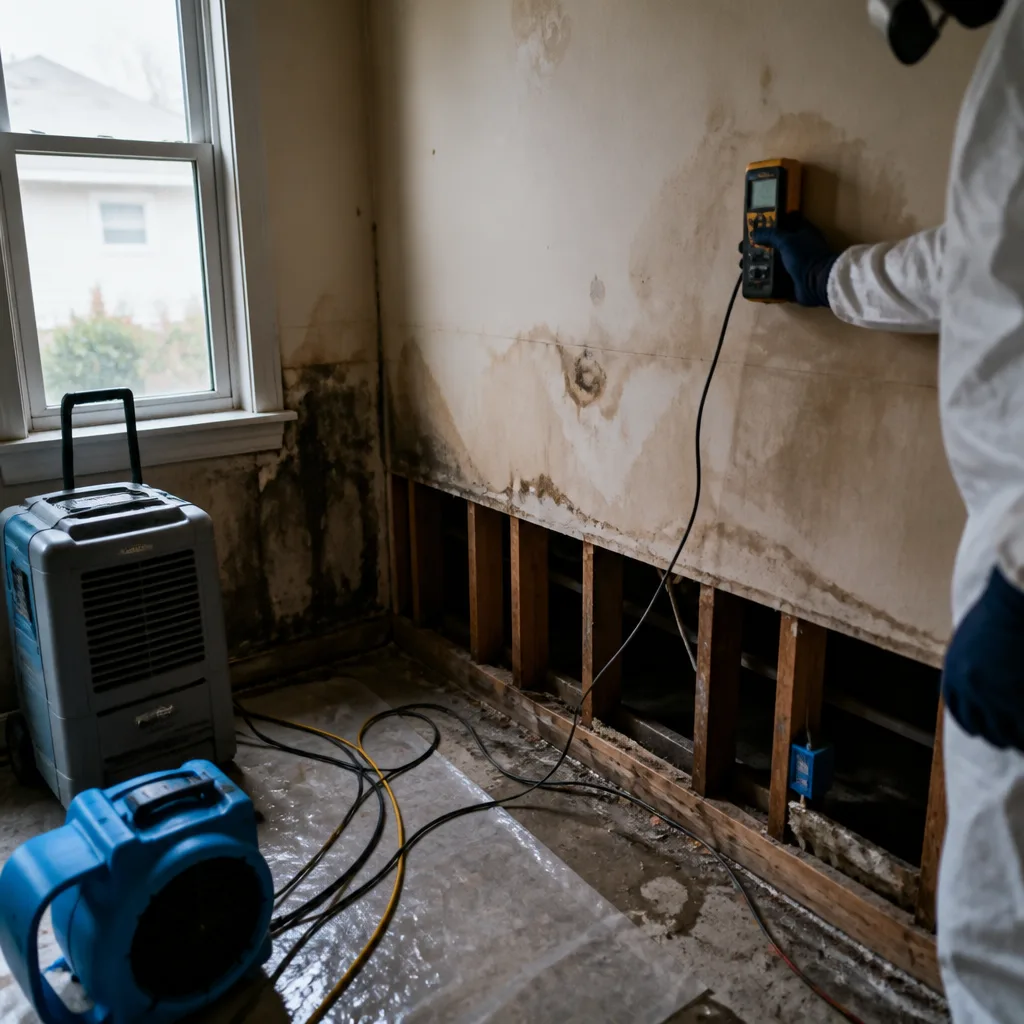 Before
 After
AfterFast, Reliable Water Damage Restoration Across Newark
Water damage restoration in Newark typically runs $2,800-$7,500 for a standard residential mitigation, with Category 3 flood jobs in the Ironbound often reaching $8,500-$14,000 once NJ DEP hazmat abatement is layered in. Most emergency calls in Newark receive a live answer within two rings, and our crews are generally on-site in the Ironbound, Forest Hill, or the Central Ward within 45-60 minutes. Call (862) 292-4268 for a written estimate before any work begins.
We know Newark’s housing stock because we’ve dried it - the pre-WWII row houses of the Ironbound, the three-family brick buildings along Broadway, the wood-frame multifamilies in the South Ward. Our Water Damage Restoration team is dispatched from our metro coordination office and carries the equipment and certifications to handle what Newark buildings actually present: lathe-and-plaster walls, asbestos floor tile, lead paint, and combined-sewer surcharges that turn basement floods into Category 3 hazmat jobs.
Why DryMark Restoration Newark Is Newark’s Preferred Water Damage Restoration Company
Newark homeowners research before they call. They read the three-star reviews. They want to see pricing, documentation, and proof that a crew understands what a 1920s brick row house with original cast-iron plumbing actually needs when the Passaic rises. We built our company around that homeowner.
Since 2011, Alicia Brennan has led Back to Dry Restoration under The Haven Standard - a documentation-first system born from her years as a claims adjuster watching homeowners lose coverage fights because of sloppy scopes and missing photos. Every Water Damage Restoration in Newark job we take carries three non-negotiables: a written price before work starts (Haven Standard, Clause 1), a photo record on every visit, and a 365-Day Done Right Promise backed by a signed guarantee, not a verbal pat on the back.
Our Newark customers receive live phone coverage 24 hours a day, 7 days a week - no voicemail trees, no “we’ll call you back tomorrow” while water wicks up drywall. Technicians are background-checked, uniformed, and licensed; their credentials are verified before they arrive at your door. And if you’ve already got a competitor’s written estimate, we’ll review it free under our Free Second Opinion policy.
We’ve restored 12,000+ homes since 2011. Every one had a written price first and a documented record when we left.
Our Water Damage Restoration Services in Newark
Emergency Water Extraction
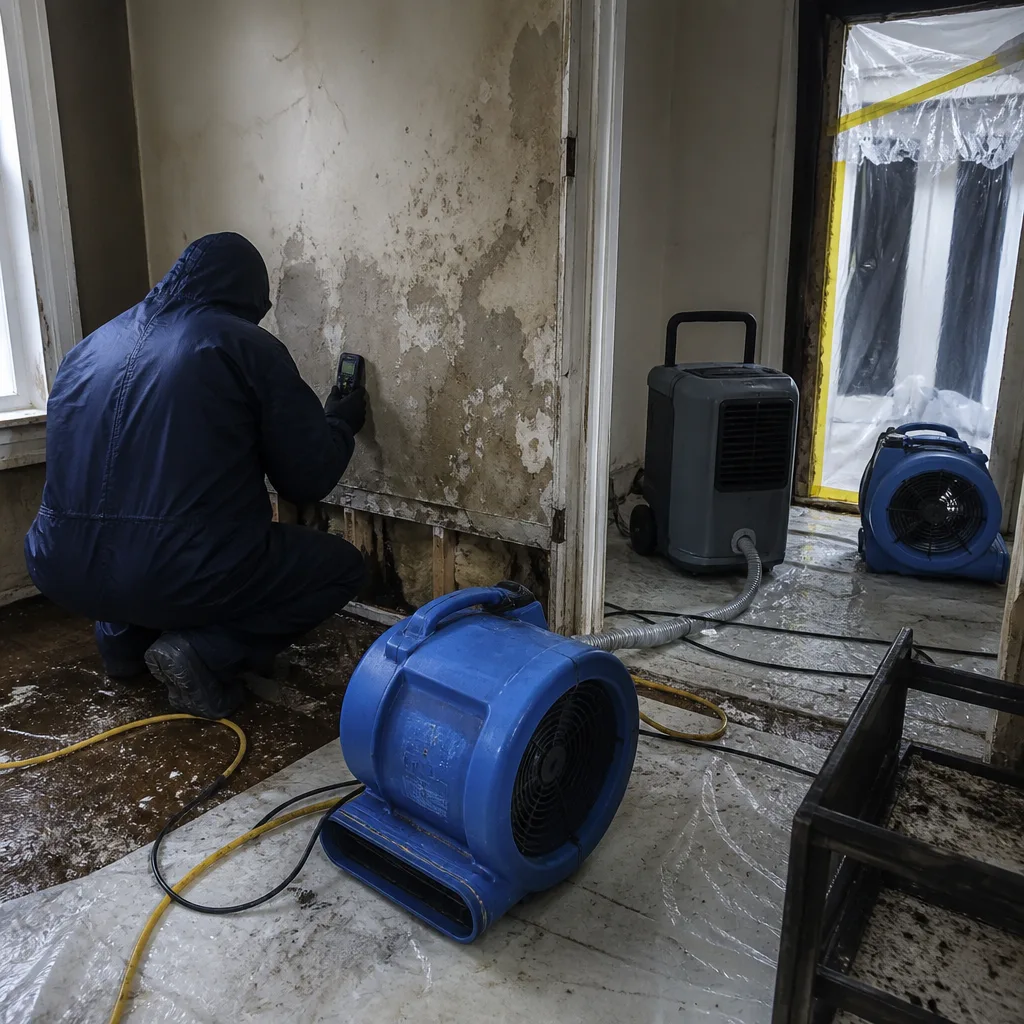
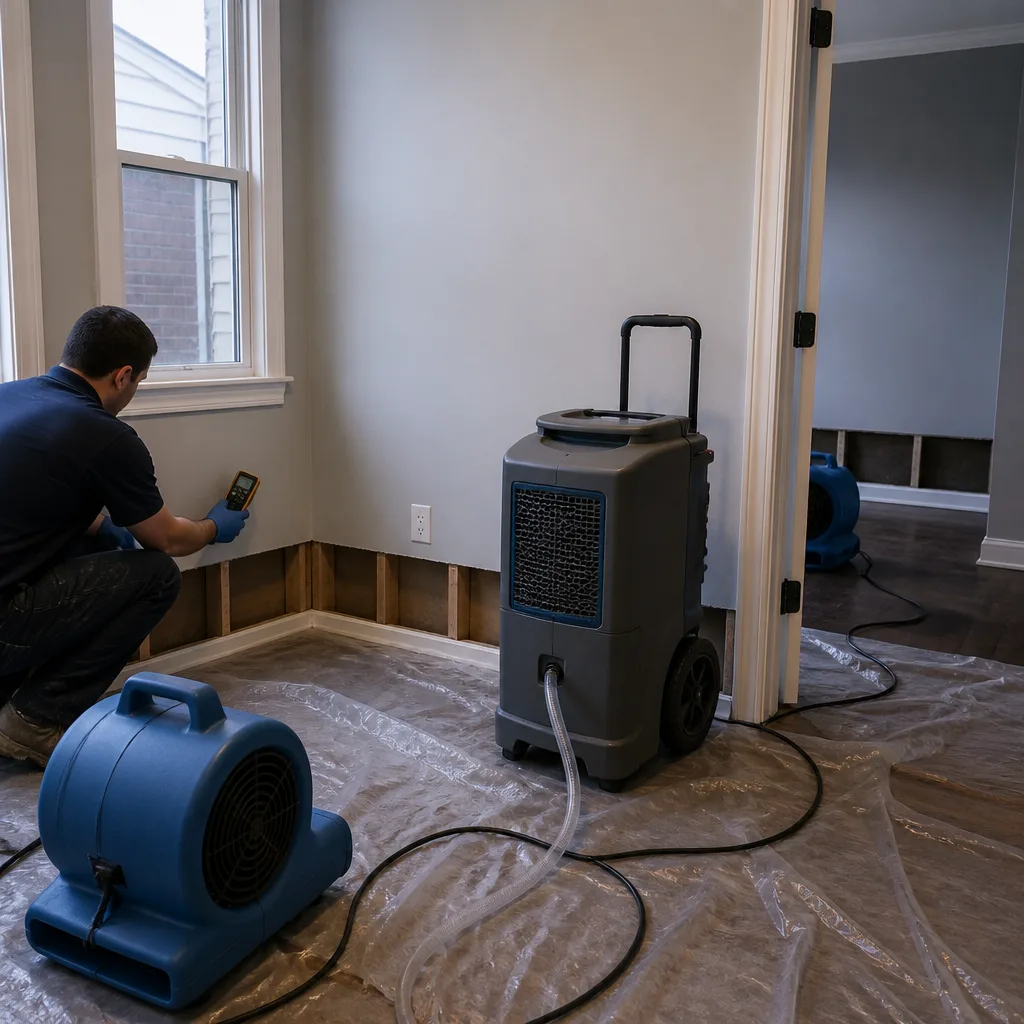
Speed matters when water is still moving. Our Newark crews arrive with truck-mounted extraction systems and portable units for tight Ironbound basements where access is limited to a 30-inch doorway. We extract standing water first, then map moisture with thermal imaging and penetrating meters to find what the eye can’t see. On a recent call near Ferry Street, surface readings showed dry slab - but the wall cavity behind original lathe-and-plaster registered saturation from a combined-sewer surcharge that had receded hours earlier. Extraction without mapping would have missed it entirely.
Structural Drying & Dehumidification
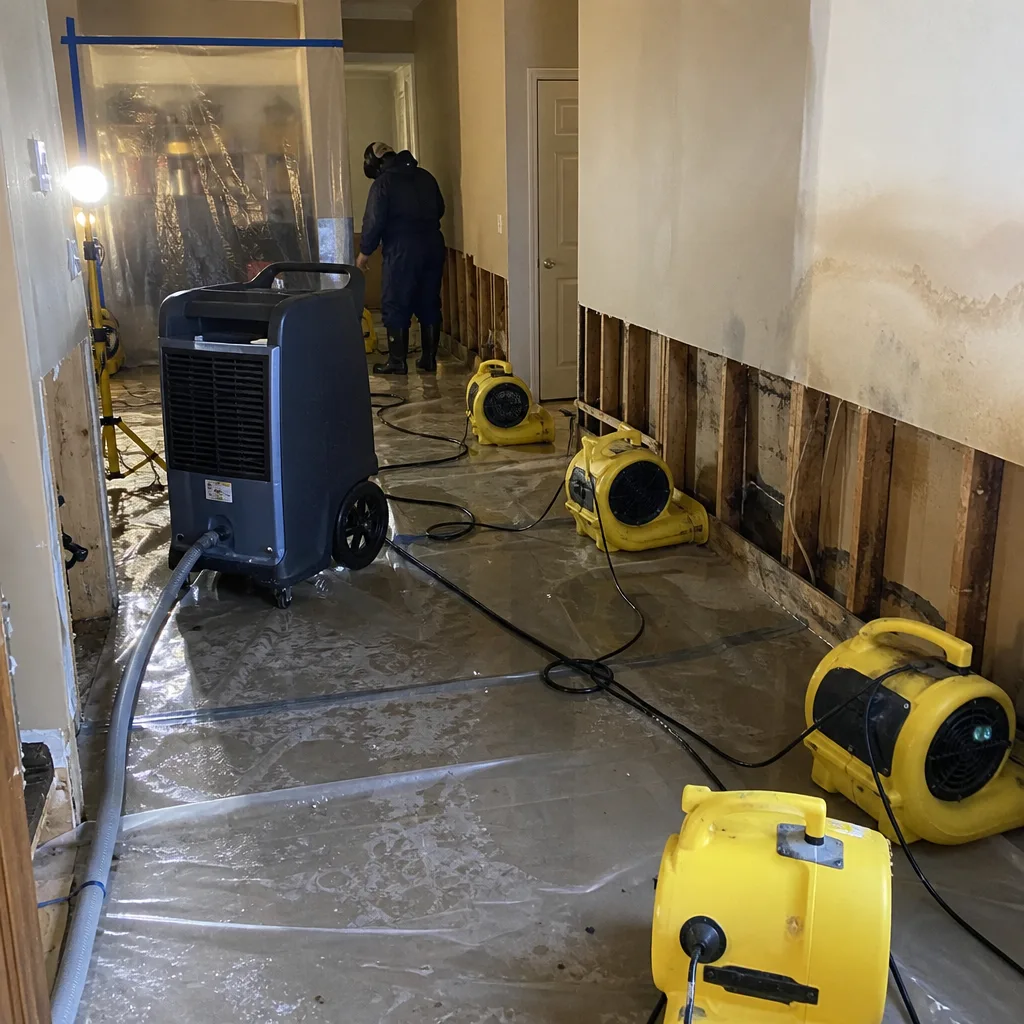
Newark’s old-growth timber framing and lathe-and-plaster assemblies dry differently than modern stick-frame construction. Our crews deploy Phoenix dehumidifiers, XPOWER air movers, and Injectidry cavity-drying systems to establish vapor pressure differentials that pull moisture from deep within wall cavities, not just surface finishes. Drying logs are recorded daily to IICRC, RIA, and IFA standards - the psychrometric data that turns your restoration invoice into a claim your adjuster pays without argument. In the Ironbound, drying timelines routinely extend 7-12 days, not the 3-5 typical of newer construction, because 1890s brick and plaster hold moisture differently than paper-faced drywall.
Flood Cleanup
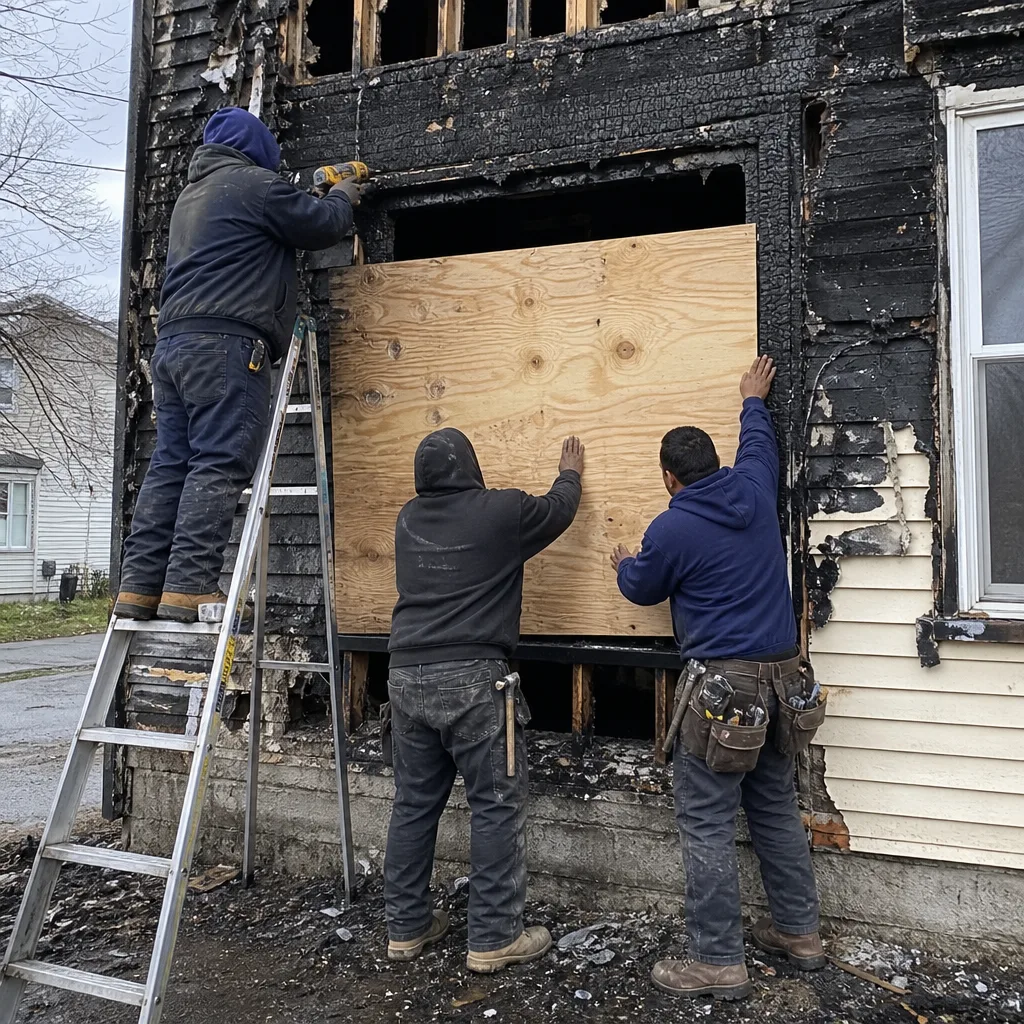
Flood cleanup in Newark is rarely just water. The Passaic River floodplain and the city’s combined-sewer infrastructure mean that basement floods across the Ironbound, Dayton, and Weequahic sections regularly carry Category 3 classification - black water contaminated with sewage, industrial runoff, and whatever the street carried in. NJ DEP regulations add another layer: most flooded structures in these neighborhoods predate 1940 and retain asbestos floor tile, pipe insulation, or lead paint, requiring full hazmat abatement protocols before structural drying can proceed. Our scopes sequence abatement first, drying second - the dual-compliance burden that distinguishes Newark flood work from jobs in Harrison or Kearny.
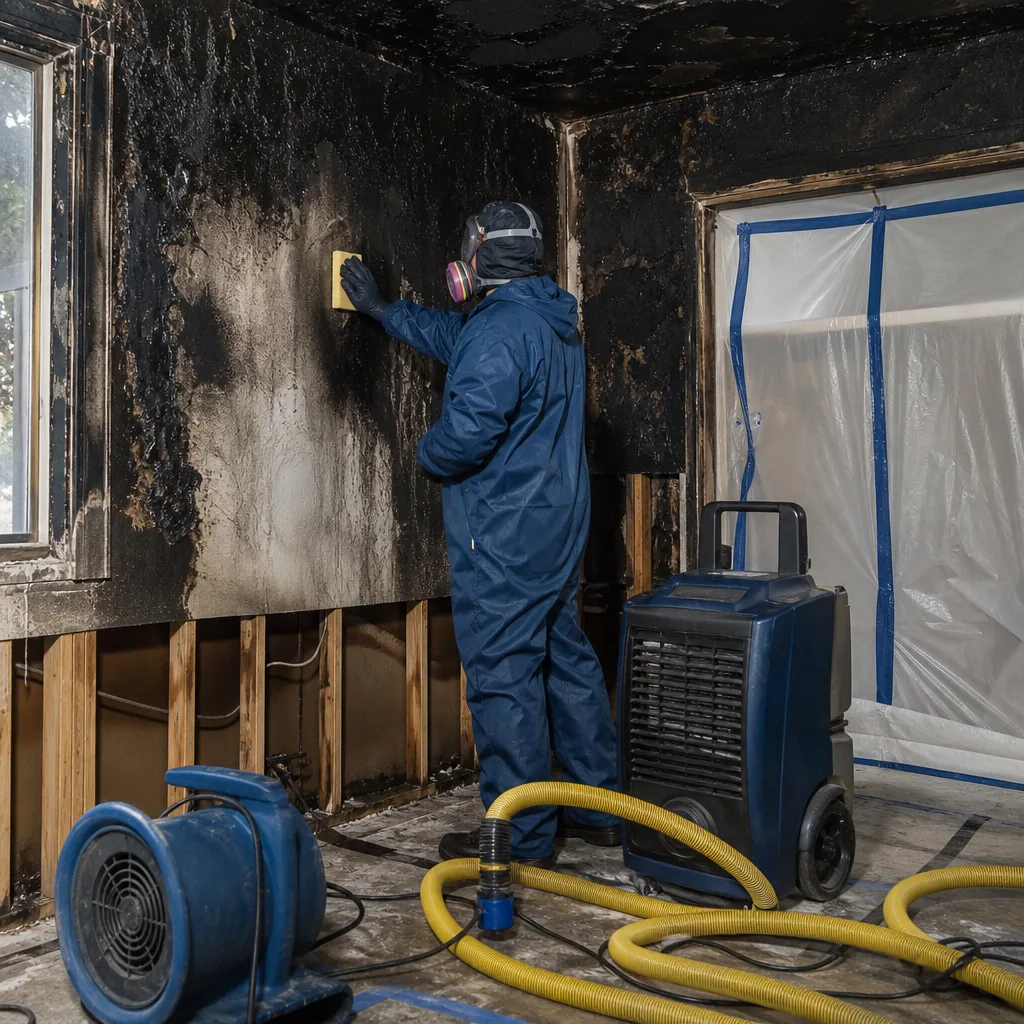
Burst Pipe Restoration
Newark’s original galvanized and cast-iron supply lines fail predictably in winter, often in buildings where the main shutoff hasn’t been exercised in decades. We extract the water, document the pipe failure with photos for your insurance file, and coordinate the drying scope with your plumber’s repair schedule. The Haven Standard requires that we deliver a written price before any demolition or drying begins - no scope-creep additions once the crew is inside your building.
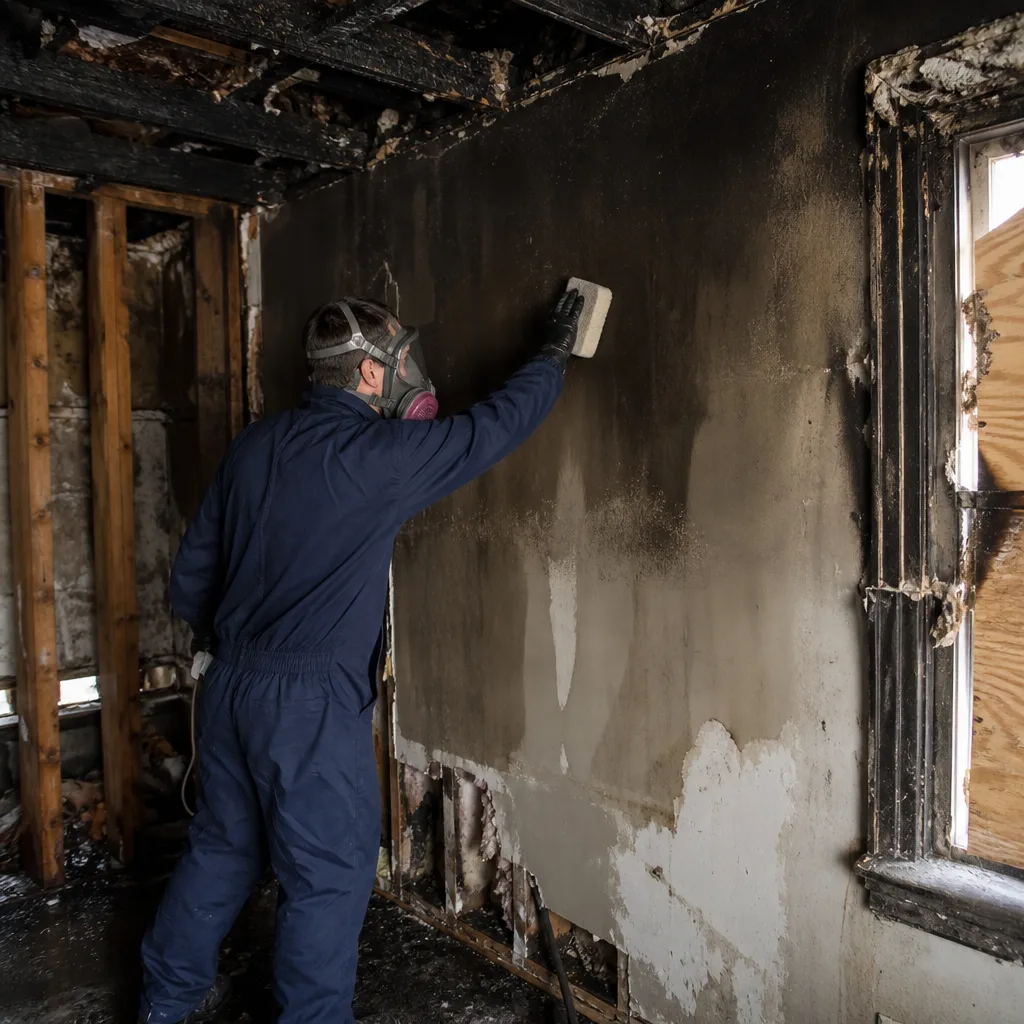
What happens when you call
- 1
A real person answersNo phone trees - you reach a local pro.
- 2
You get an upfront price rangeHonest numbers before anyone is dispatched.
- 3
A background-checked tech heads outLicensed & insured, dispatched right away.
- 4
You approve before work beginsNothing starts until you say go.
BeforeAfterTrusted Brands We Service in Newark
Our Newark crews deploy professional-grade drying systems from Dri-Eaz, Phoenix, XPOWER, B-Air, and Injectidry - equipment selected specifically for the dense, below-grade spaces common in Newark’s row house stock. Injectidry’s cavity-drying panels are particularly effective behind the lathe-and-plaster walls of pre-1940 multifamilies, where standard air mover placement can’t reach trapped moisture. All equipment operation is documented to IICRC, RIA, and IFA standards, with daily drying logs included as standard deliverables, never upsells.
Common Water Damage Restoration Problems We See in Newark Homes
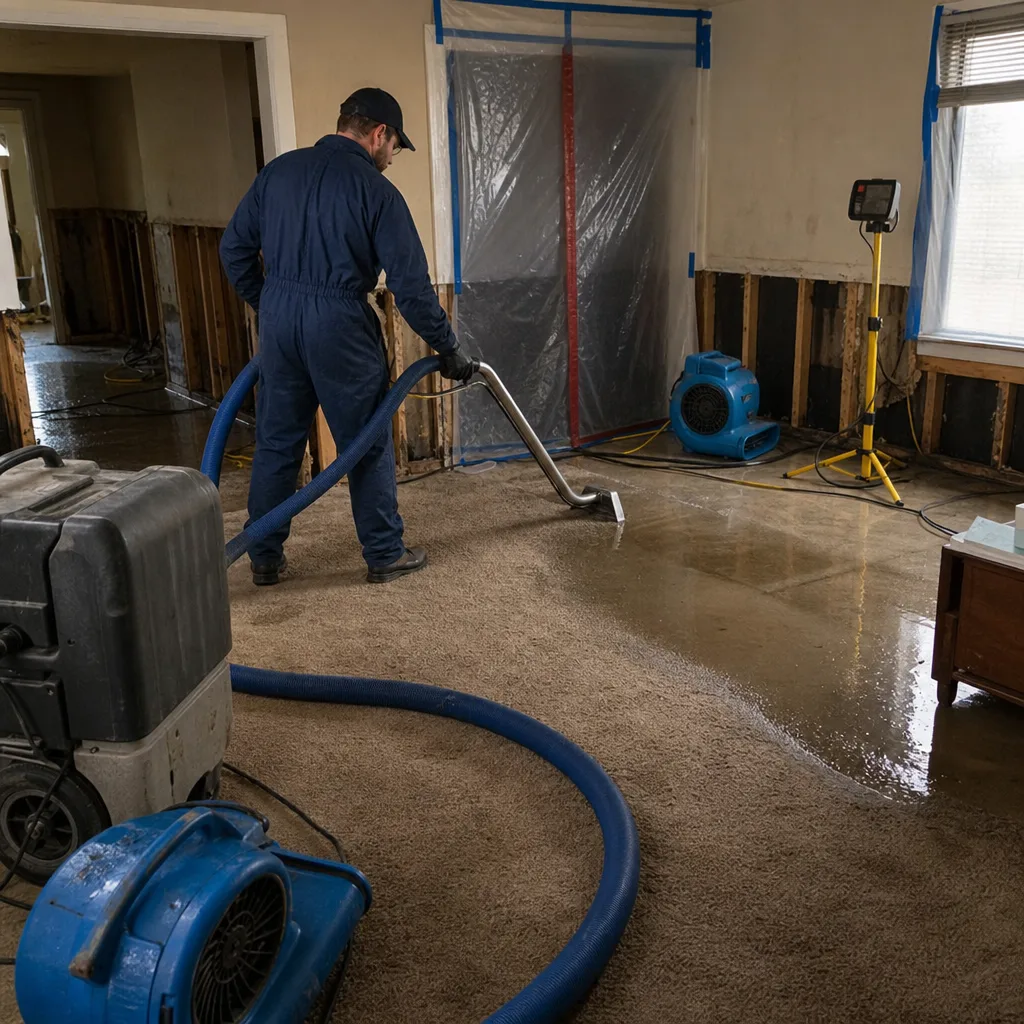
- Combined-sewer surcharges delivering Category 3 water to basements. Newark’s aging infrastructure can’t separate storm flow from sewage during heavy rain. The result is black water backing up through floor drains across the Ironbound and South Ward - water that must be classified, contained, and remediated under IICRC S500 Category 3 protocols, not standard grey-water procedures.
- Asbestos floor tile and pipe wrap disturbed during standard mitigation. Pre-1940 Newark buildings routinely contain asbestos-containing materials. Restoration crews who skip NJ DEP abatement sequencing risk fiber release, regulatory violation, and homeowner liability. Our scopes build abatement containment into the initial response.
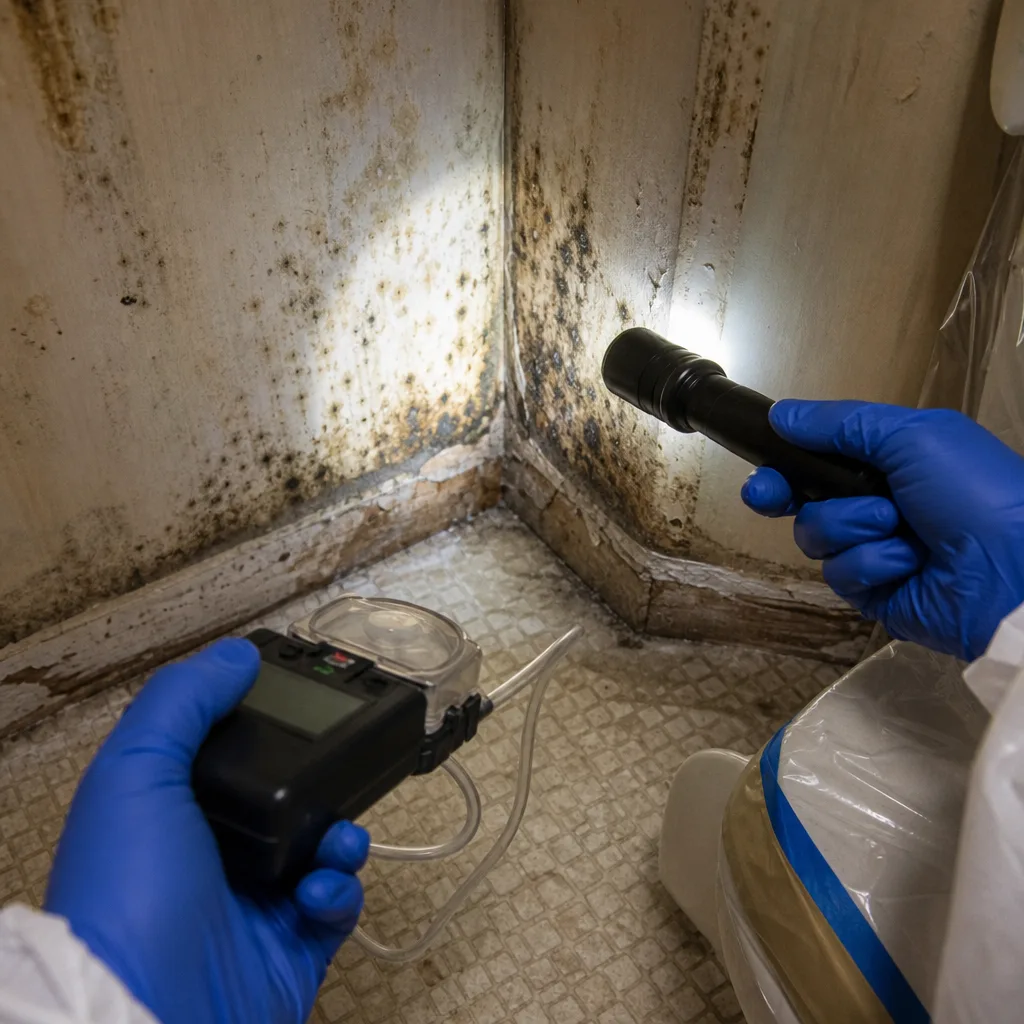
- Embedded mold behind “repaired” walls from previous Passaic floods. Because the Ironbound floods on roughly a 3-to-5-year cycle, below-grade units rebuilt with standard paper-faced drywall after Irene or Sandy now reliably hide mold colonies. The next scope almost always opens deeper than initial moisture readings suggest.
- Lathe-and-plaster assemblies that read surface-dry while cavities remain saturated. Original Newark wall systems don’t fail visibly. Moisture meters with penetrating probes are essential - and crews who trust surface readings alone leave structural damage and mold risk behind finished surfaces.
Pricing for Water Damage Restoration in Newark, NJ
We publish ranges because Haven Standard, Clause 1 requires a written price before work begins - and that price should never be a mystery until a crew is standing in your living room.
| Service | Typical Newark Range |
|---|---|
| Emergency water extraction (single room) | $450-$950 |
| Structural drying & dehumidification (standard residential) | $2,800-$5,200 |
| Flood cleanup with Category 3 classification | $4,500-$8,500 |
| Basement water removal with sewage contamination | $3,200-$7,000 |
| Ironbound job with NJ DEP asbestos abatement + drying | $8,500-$14,000 |
| Burst pipe restoration (extraction + drying, no rebuild) | $2,200-$4,800 |
What moves a job up or down: square footage affected, material classification (Category 1 clean water vs. Category 3 black water), whether hazmat abatement is triggered, accessibility constraints in tight row house basements, and the extent of demolition required to expose framing for drying. Every estimate is free, written, and delivered before any equipment is powered on. Bring a competitor’s written quote and we’ll review it at no charge under our Free Second Opinion policy.
We Also Serve Cities Near Newark
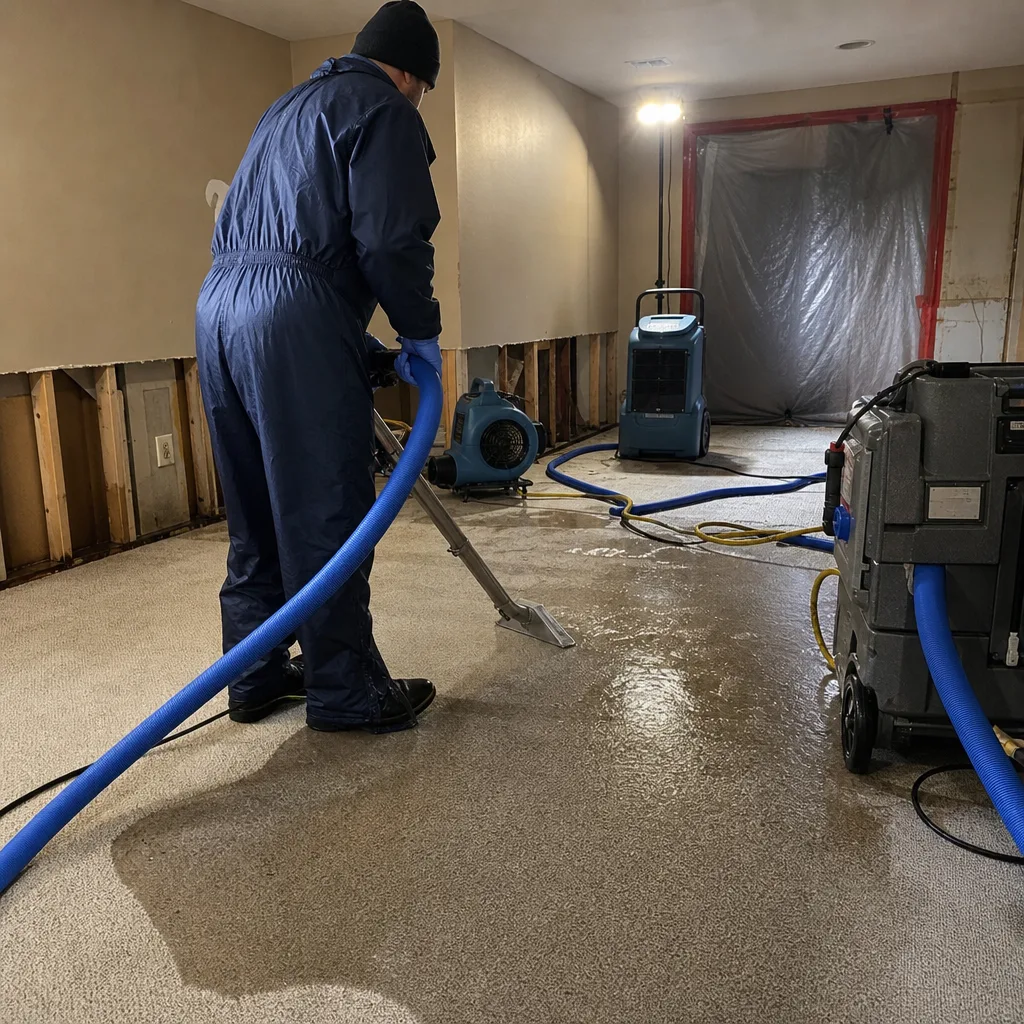
Our crews respond throughout the immediate metro area, including Harrison, Kearny, North Arlington, and Bayonne. Each city carries its own housing stock and flood risk profile, but the documentation standard stays the same: written price first, photo record on every visit, signed 365-Day Done Right Promise on completion.
Serving Newark, NJ - Our Local Coverage Area
We’re based in the Newark area and know this community well. Use the map below to see our service coverage - if you’re nearby, we can almost certainly help.
FAQs - Water Damage Restoration in Newark
Because Newark’s combined sewer system surcharges during heavy rain, delivering raw sewage, street runoff, and industrial contaminants through basement floor drains. The Passaic River floodplain position means even “clean” river overtops carry Category 3 classification under IICRC S500 standards. Call (862) 292-4268 for a written assessment of your specific situation - estimates are free.
Yes, if the structure predates 1980 and the scope will disturb suspect materials. Most Ironbound buildings predate 1940 and retain asbestos floor tile, pipe wrap, or mastic. NJ DEP regulations require containment and abatement before demolition or aggressive drying begins. Our crews test and contain as the first step, not an afterthought. Call (862) 292-4268 to discuss your building’s specific requirements.
Mold colonization can begin in 24-72 hours in Newark’s humid summer conditions, but the bigger risk is pre-existing mold from previous Passaic floods. Below-grade units in the Ironbound that were “repaired” with paper-faced drywall after Irene or Sandy routinely harbor embedded colonies that reactivate with new moisture. Our scopes assume deeper investigation than initial readings suggest. Call (862) 292-4268 for moisture mapping that finds what’s actually there.
Absolutely. The roughly 3-to-5-year flood cycle means many Ironbound basements have been wetted multiple times. Our scopes routinely call for removal of finishes from previous “repairs” to expose framing that may have been damp for years. The initial moisture reading is a starting point, not the final word. Call (862) 292-4268 for a scope that accounts for your building’s real history.
We deploy Phoenix LGR dehumidifiers, XPOWER air movers, and Injectidry cavity-drying systems specifically sized for the tight, below-grade spaces and dense wall assemblies of Newark row houses. All equipment operation is documented with daily psychrometric readings - temperature, relative humidity, and vapor pressure - to IICRC, RIA, and IFA standards. Call (862) 292-4268 for equipment specifications on your job.
On a three-family brick row house near Ferry Street in the Ironbound, our techs met Category 3 water backing up through a basement floor drain after a combined-sewer surcharge - moisture mapping showed the slab reading dry while the wall cavity pegged wet. Containment went up for the friable pipe wrap, abatement cleared before our Phoenix dehumidifiers and XPOWER air movers started structural drying, and the drying logs ended up running nine days past what the initial moisture readings predicted once the last flood’s framing was exposed.
Call (862) 292-4268 now for a free, written estimate before any work begins. Live person, every call, 24 hours a day.
Written by Alicia Brennan, Owner at Back to Dry Restoration, serving Newark since 2011.