
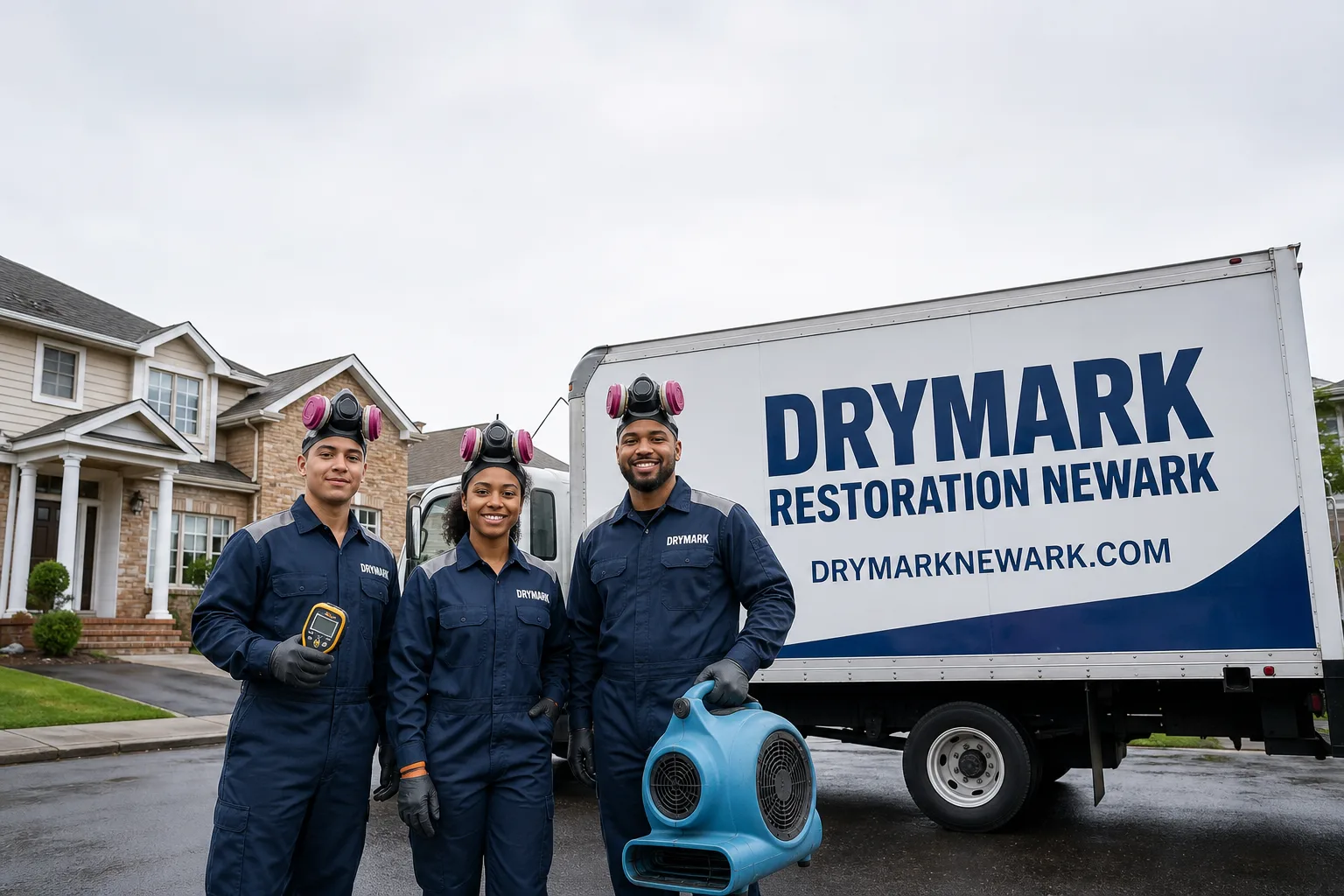
Free visual inspection and a written scope of work before any mitigation begins - photos, moisture readings, and drying logs go in your claim file
The scope we write is the scope we bill. Anything new gets shown to you, in writing, before we touch it.
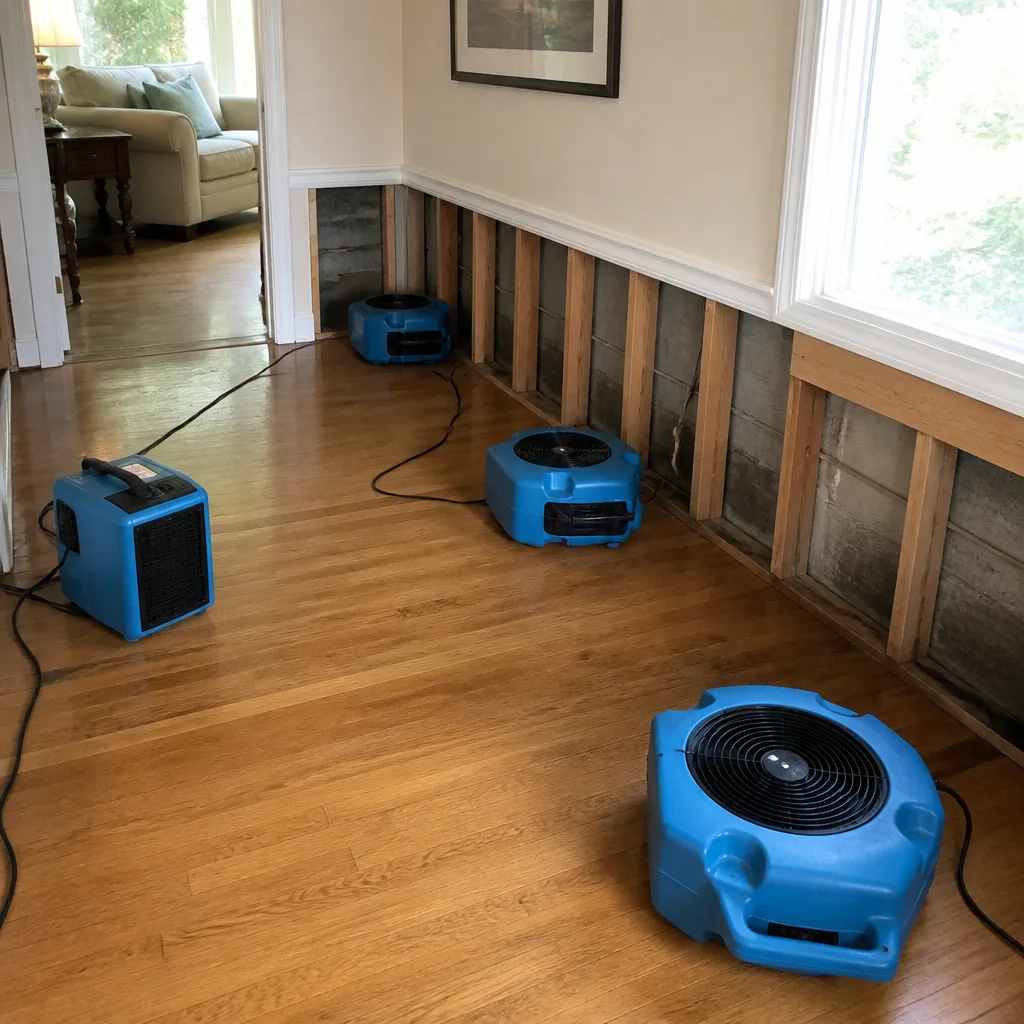
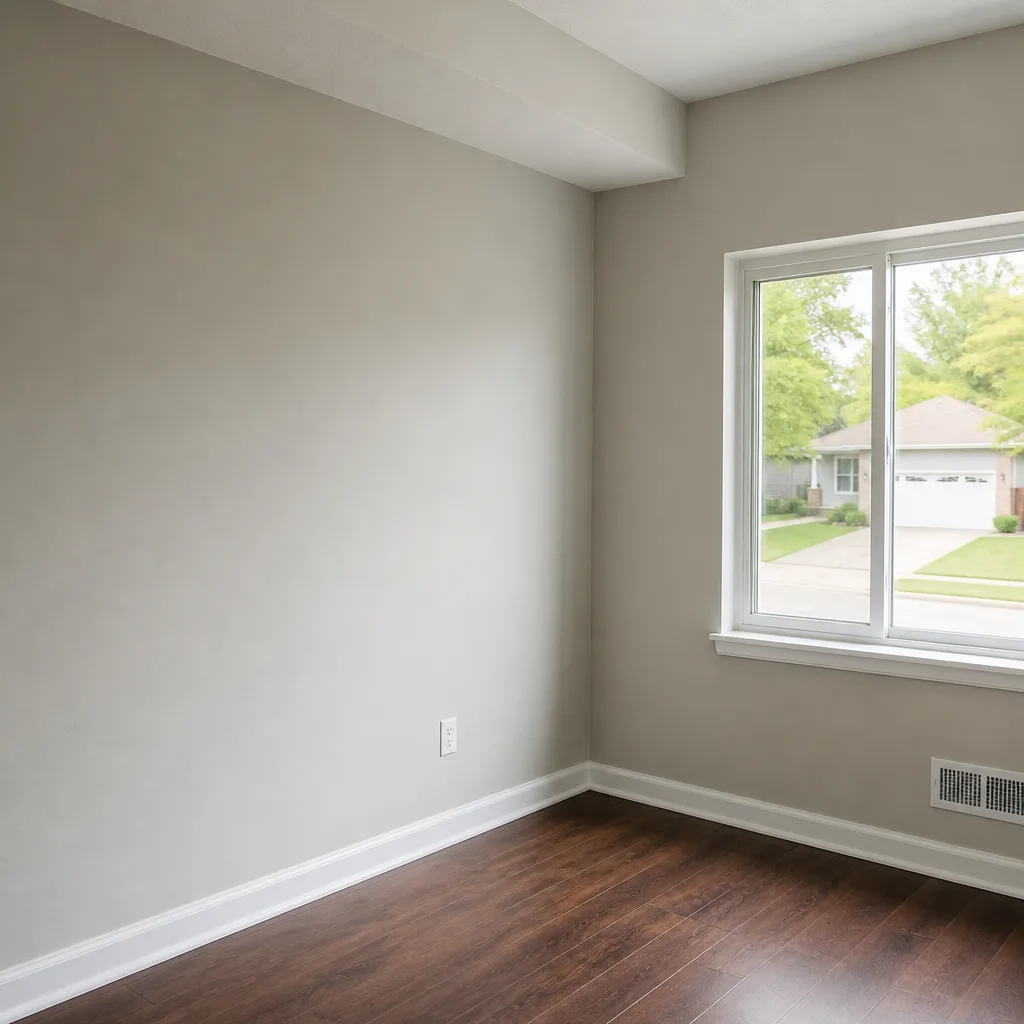
 Before
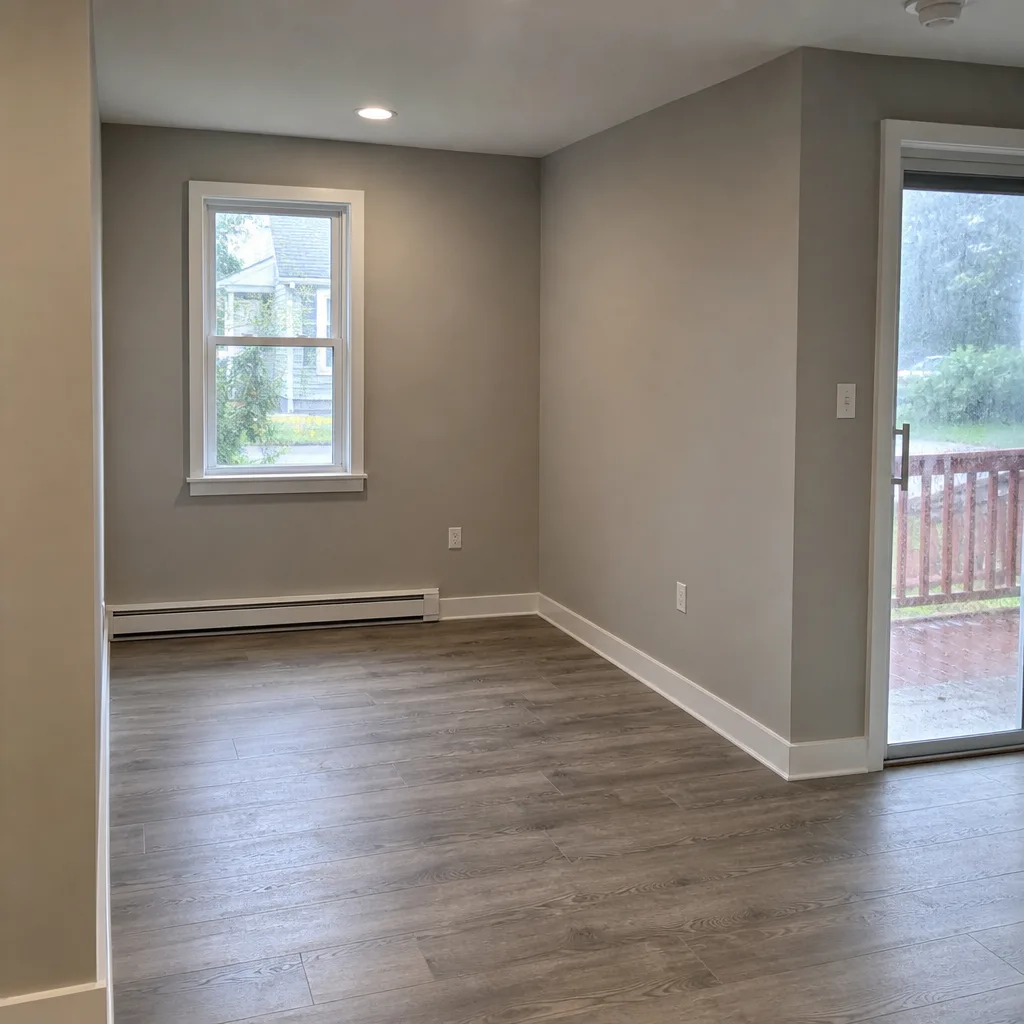 After
After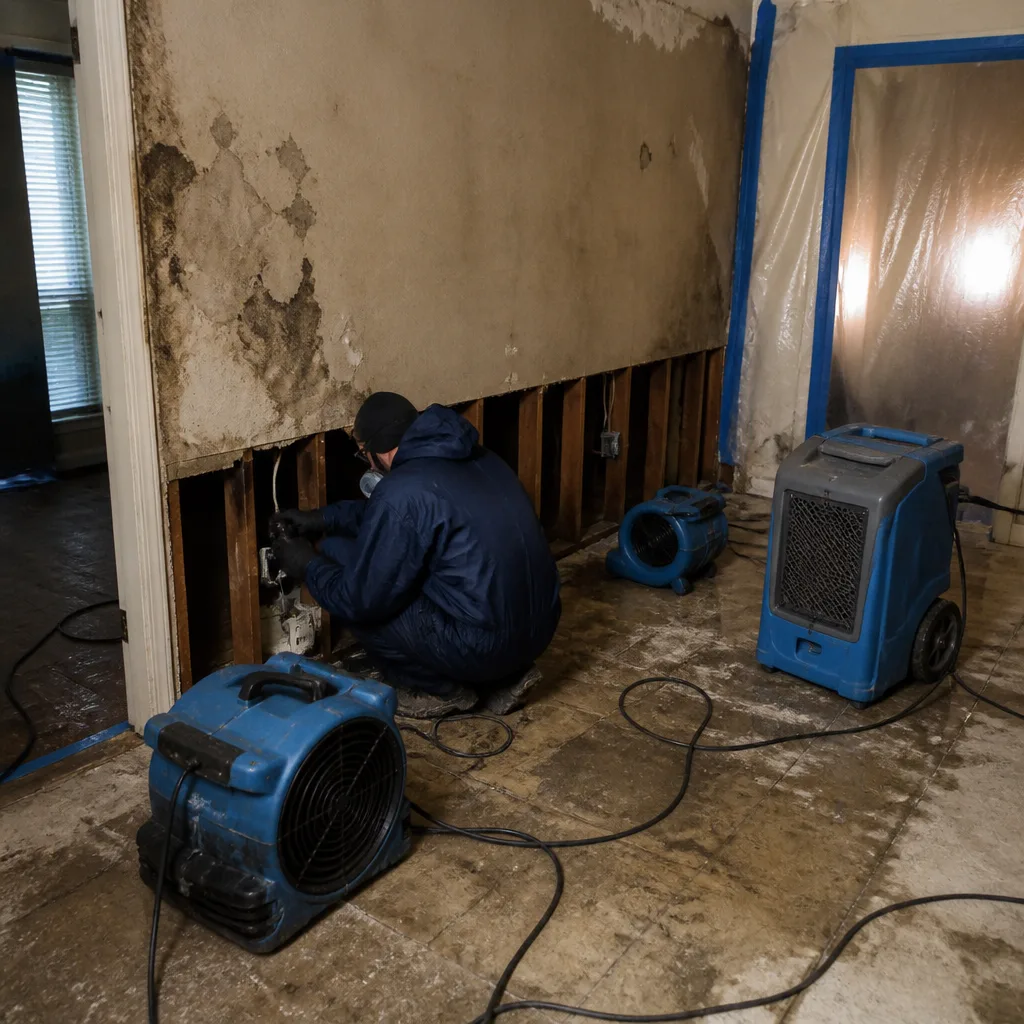 Before
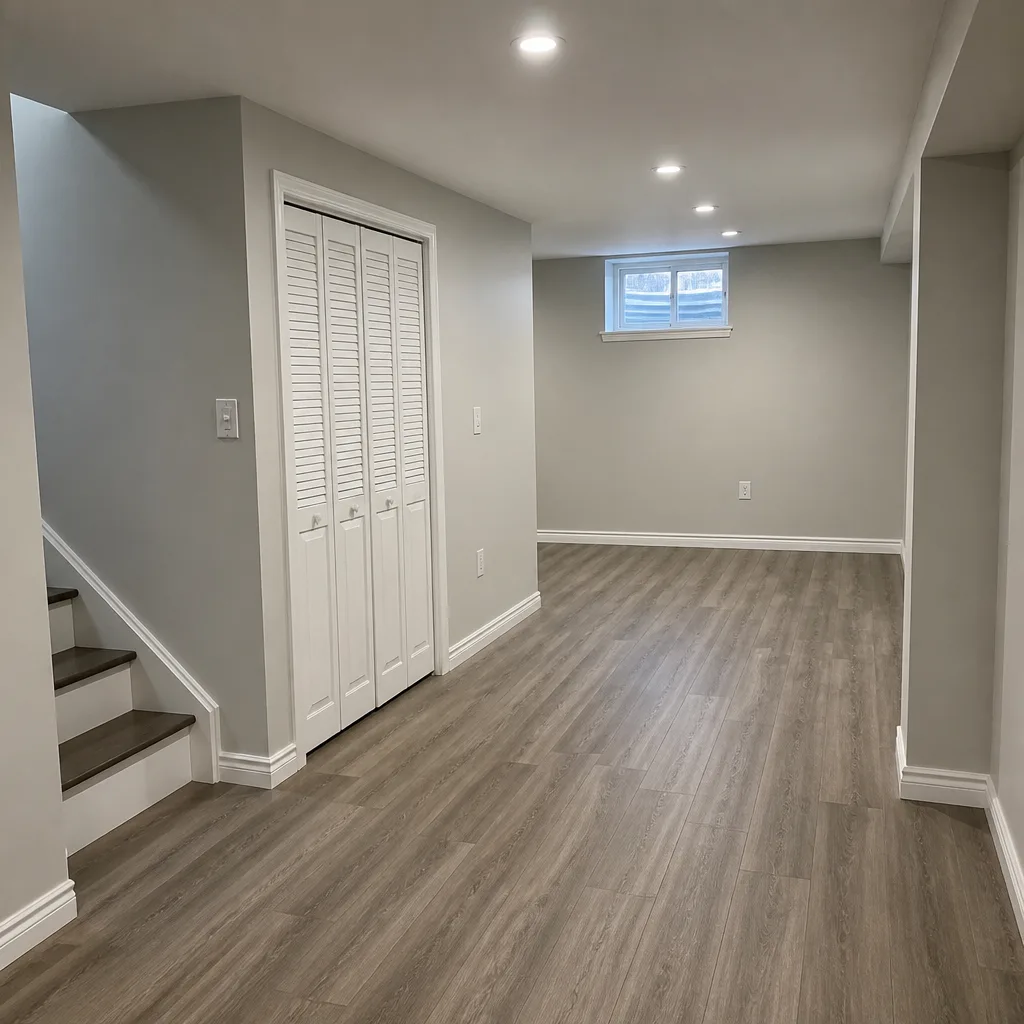 After
After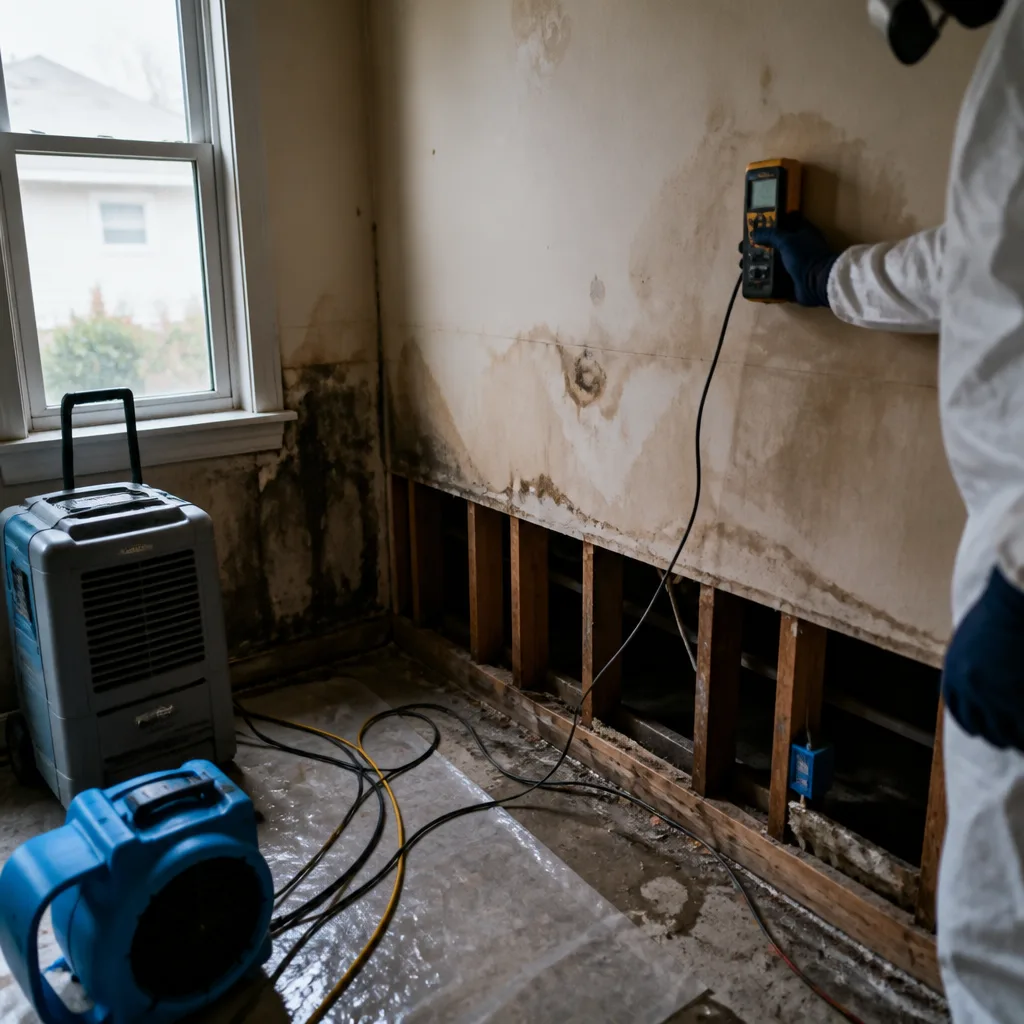 Before
 After
AfterTrusted Mold Remediation for Newark Homeowners
Mold remediation in Newark typically costs $1,200-$4,500 for residential jobs, with most projects completed in 3-5 business days from inspection to clearance testing. At DryMark Restoration Newark, we’ve restored more than 12,000 homes since 2011, every one with a written price before work started and a documented photo record on every visit. If you’re seeing dark patches near your HVAC returns or catching a musty smell when the heat kicks on in your Forest Hill brownstone, we’re available at (862) 292-4268 with live phone coverage 24 hours a day, 7 days a week - no voicemail trees, no next-business-day callbacks while spores are still active.
Newark’s housing stock presents specific mold pressures you won’t find in newer suburban developments. The pre-war brick and frame homes in the Ironbound, the converted industrial lofts in Downtown, and the mid-century ranch homes in Weequahic all carry distinct moisture signatures. We’ve documented Stachybotrys behind the plaster of North Ward Victorians where failed pointing let river humidity migrate inward, and we’ve traced Aspergillus colonies through the ductwork of Harrison Avenue apartment conversions where bathroom exhaust was never properly vented. Alicia Brennan founded this company after years as a claims adjuster watching homeowners lose coverage fights because the restoration company couldn’t produce a moisture log or a dated photo. That’s the documentation gap we built DryMark Restoration Newark to close.
Every mold job we take starts with a written scope and price before anyone opens a containment, and ends with a 365-Day Done Right Promise backed by The Haven Standard. If it’s not done right, we make it right. Not a verbal assurance - a signed guarantee stamped on every job file.
What Our Mold Remediation Service Includes
Mold Inspection & Testing
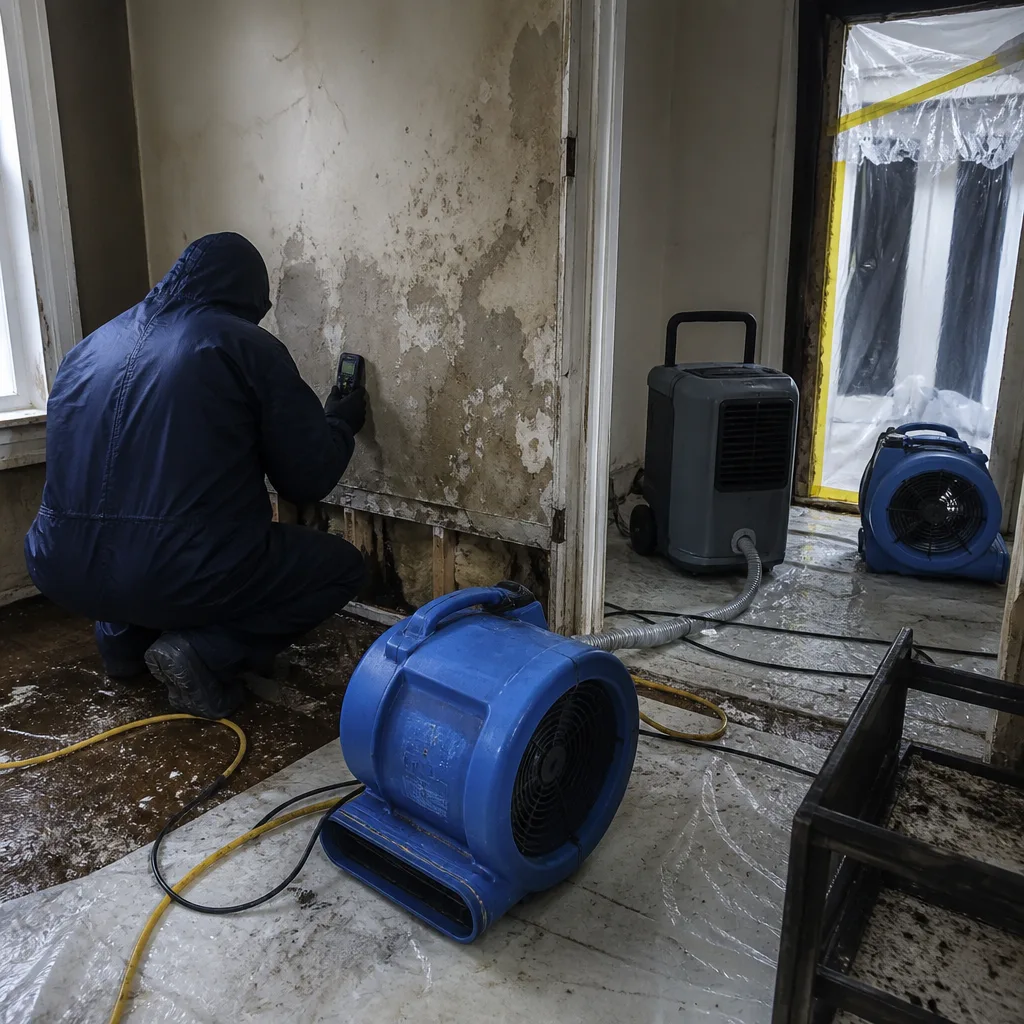
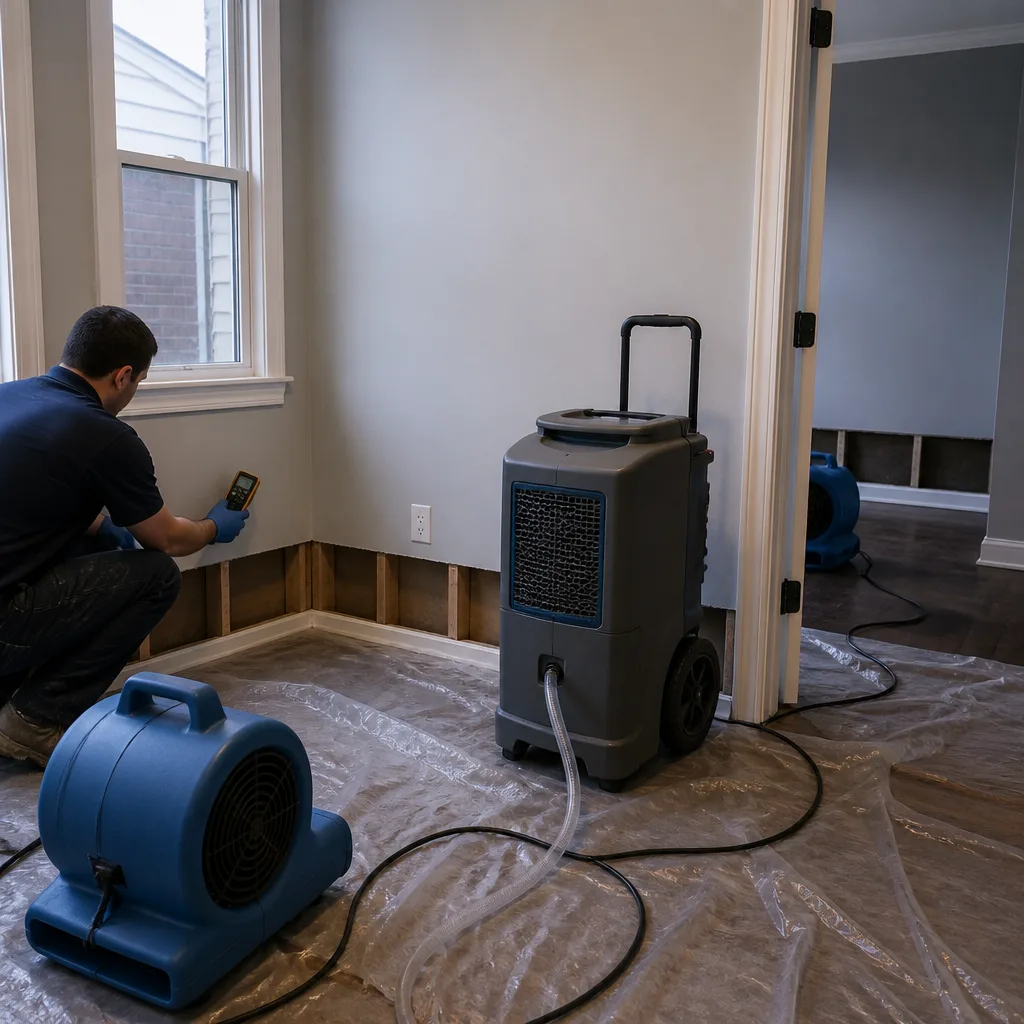
Mold inspection and testing is the diagnostic phase where we determine species, concentration, and moisture source - without this, you’re guessing at scope and cost. In Newark, we typically find inspection reveals multiple species rather than one, especially in homes with layered renovation history where drywall was installed over plaster without vapor barrier assessment. Our technicians collect air and surface samples for independent lab analysis, document relative humidity and temperature in every room with calibrated meters, and trace moisture patterns with thermal imaging to identify the source, not just the symptom. You’ll receive the lab report, our moisture readings by room, and a written scope with fixed pricing before any remediation begins - Haven Standard, Clause 1.
Mold Removal
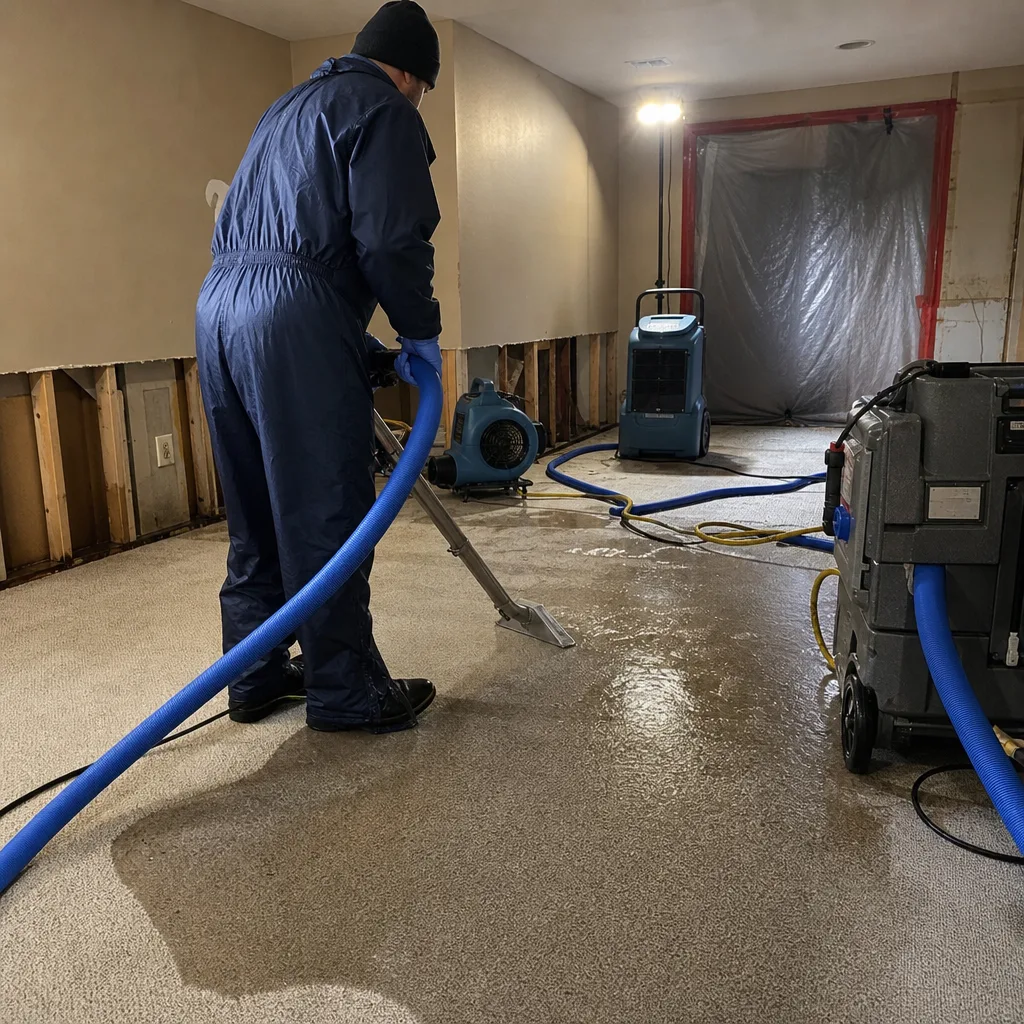
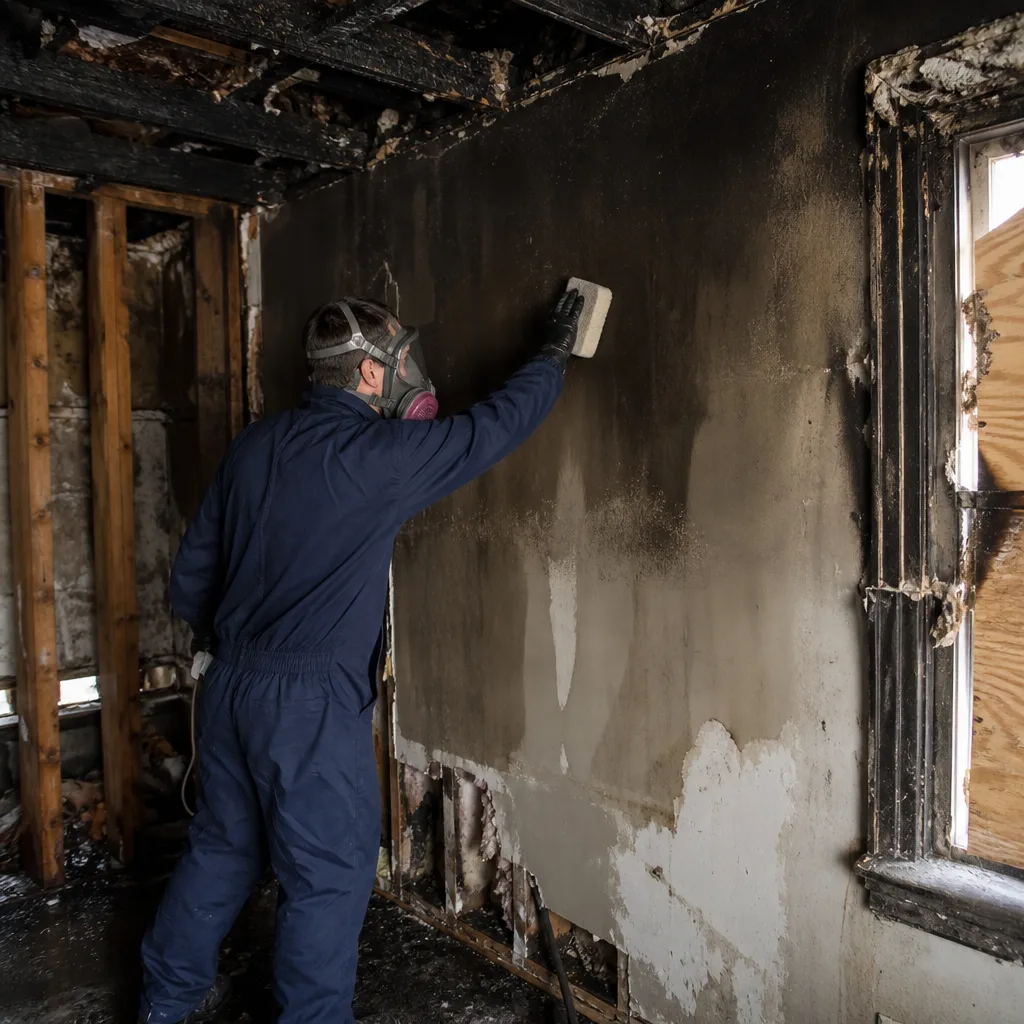
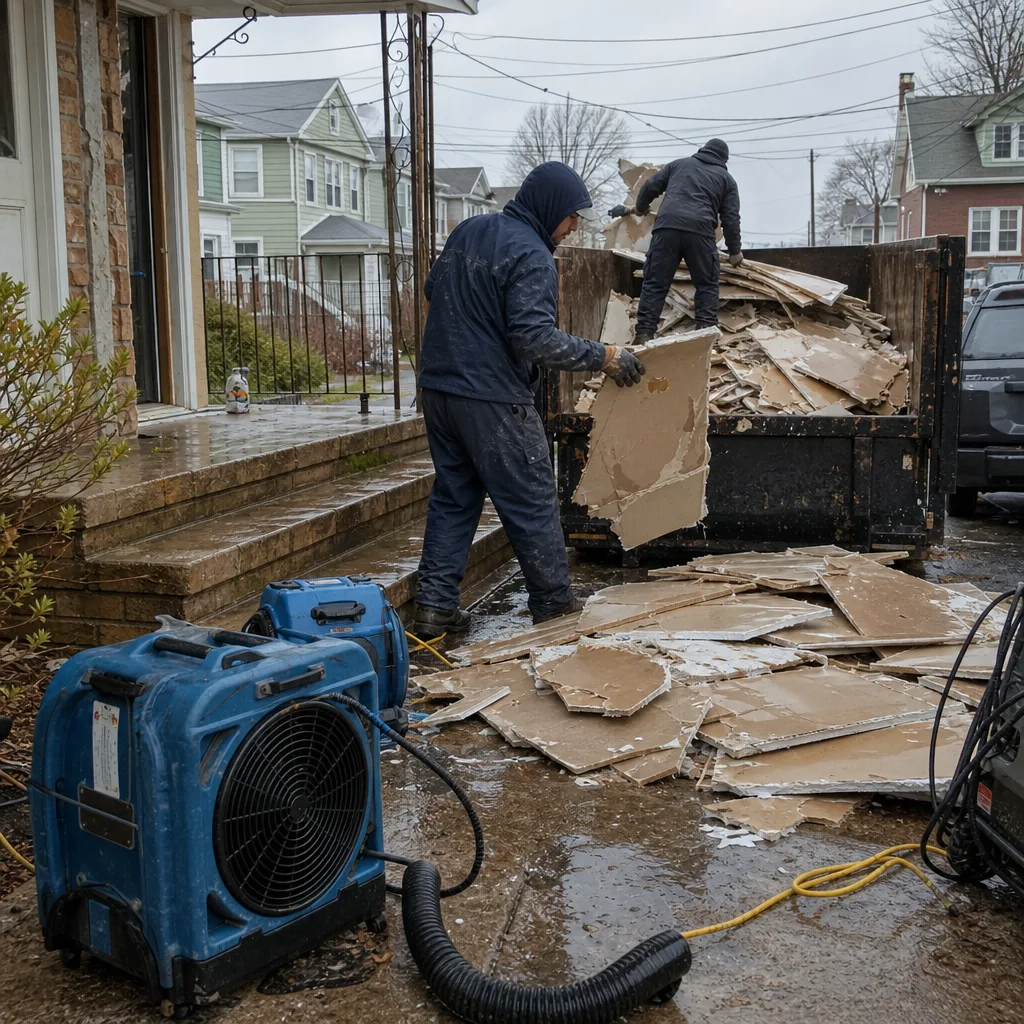
Mold removal is the physical extraction of colonized materials following IICRC S520 standards, not surface cleaning with bleach or consumer-grade products. We see the most extensive removal needs in Newark’s older homes where slow leaks behind tile or under flooring went unaddressed through multiple owners, particularly in basement utility rooms and kitchen soffits where galvanized supply lines fail. Our crews establish negative-pressure containment, remove non-salvageable porous materials with HEPA-contained tools, and clean semi-porous and non-porous surfaces with antimicrobial agents matched to the species identified in testing. Every removal phase is photo-documented before, during, and after, with those images included in your job file for insurance or future property disclosure.
Black Mold Remediation
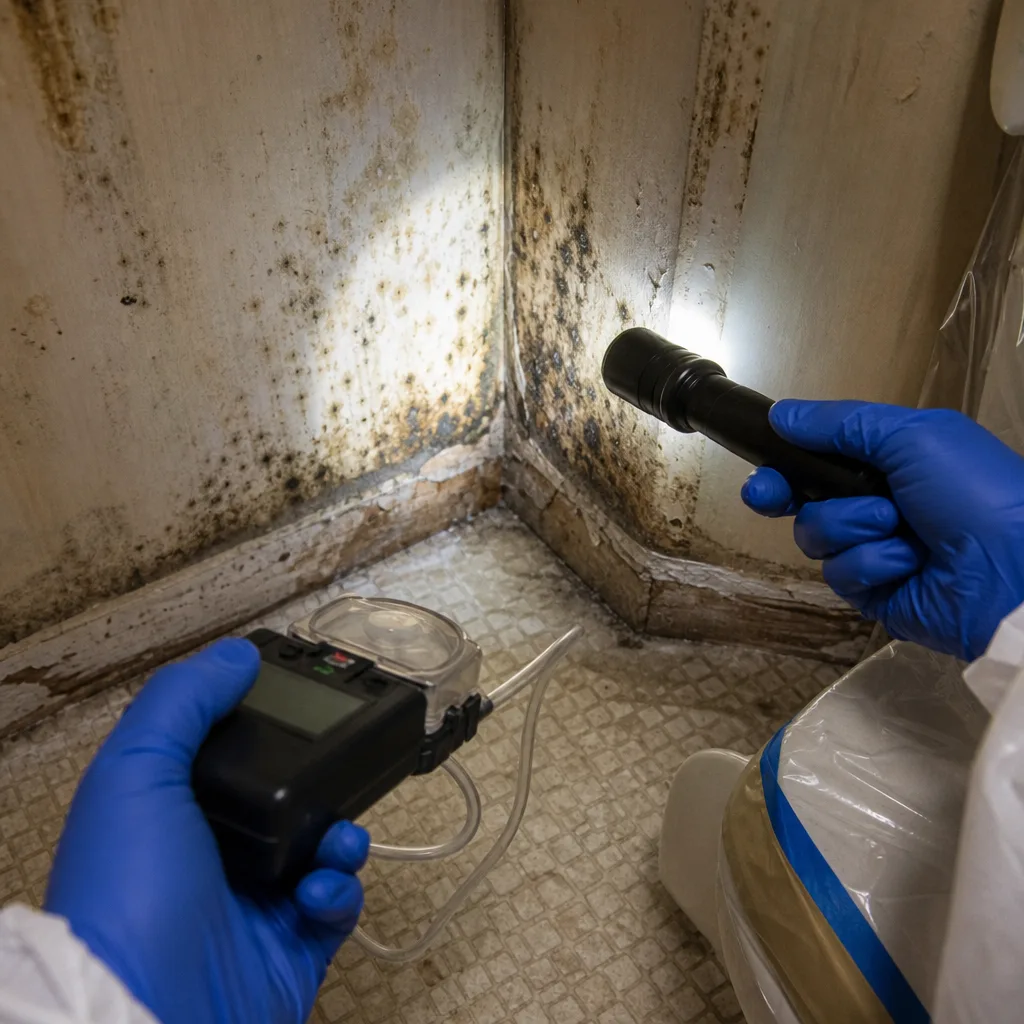
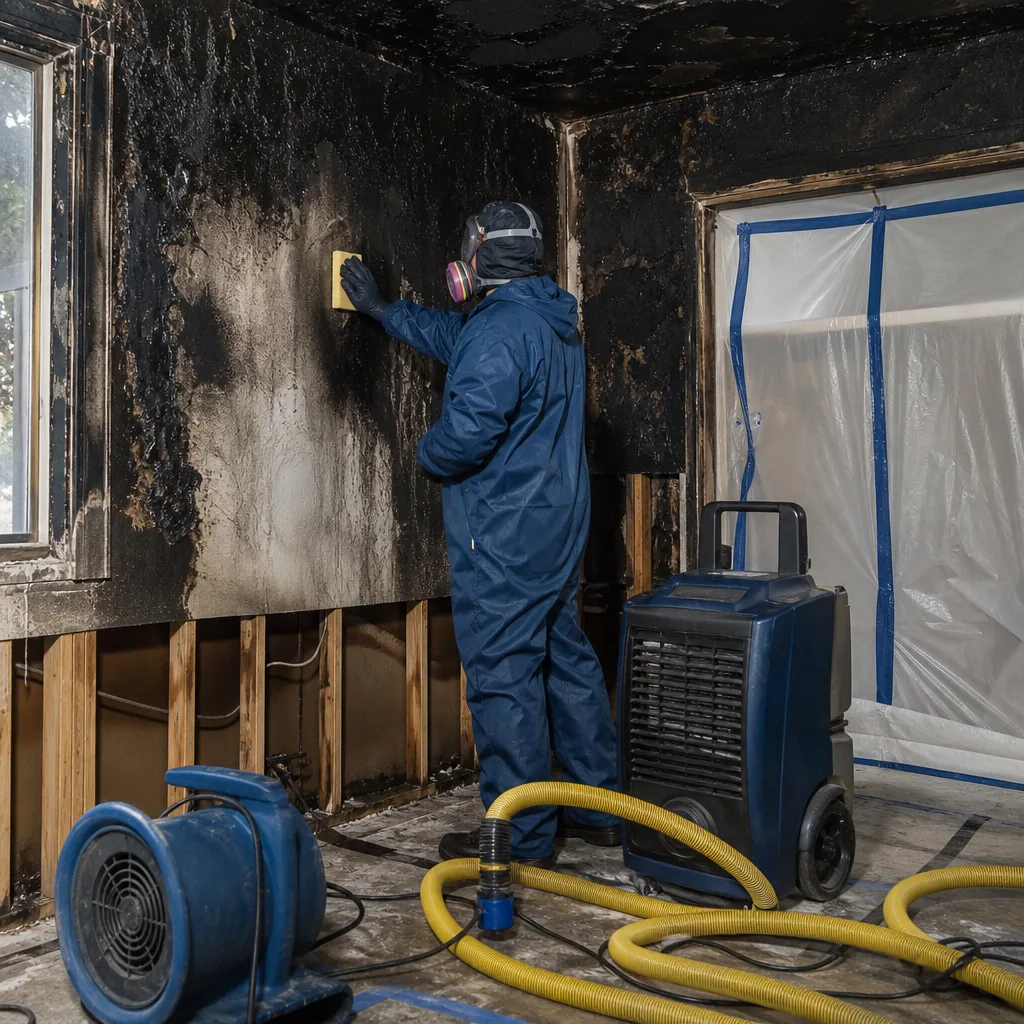
Black mold remediation addresses Stachybotrys chartarum and similar toxigenic species, which require stricter containment and PPE protocols than general mold removal. In Newark, we encounter Stachybotrys most often in homes with chronic roof leaks or failed window flashing, particularly in the South Ward and Clinton Hill where flat-roof additions from the 1960s and 70s are reaching end of service life. Our black mold protocol includes full-face respirators and disposable protective suits for technicians, double-layer containment with air scrubbers running continuously, and specialized disposal documentation that satisfies New Jersey DEP solid waste requirements. We don’t use the term “black mold” to heighten fear - we use it precisely, because the remediation protocol differs and your documentation must reflect that difference for insurance and resale purposes.
Air Quality Restoration
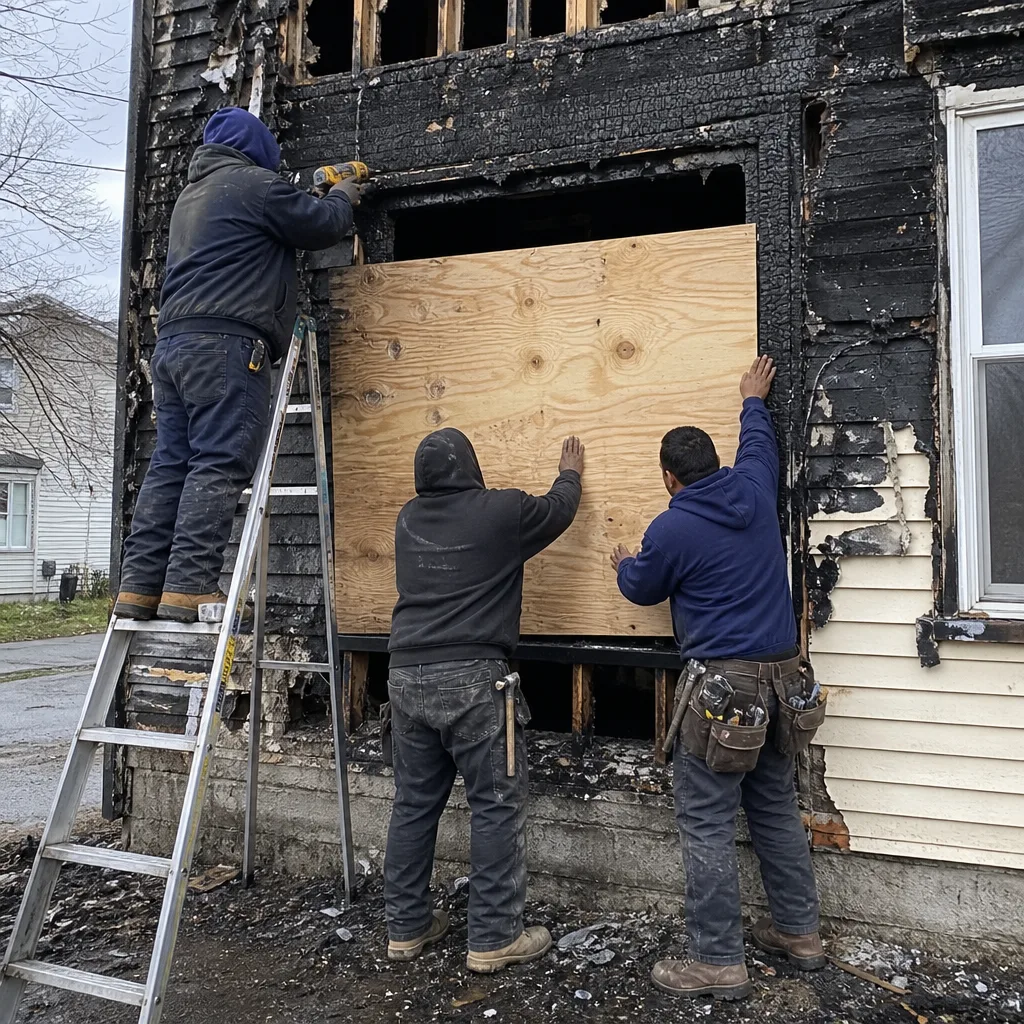
Air quality restoration returns indoor spore counts to background levels through source removal combined with mechanical filtration and controlled ventilation. Newark’s location on the Passaic River and its dense urban fabric mean outdoor spore baselines run higher than suburban markets, so our clearance standards account for local conditions rather than applying generic national thresholds. We deploy HEPA air scrubbers sized to room volume, run them through a calculated number of air changes based on your square footage and ceiling height, and verify results with post-remediation air sampling that compares indoor counts to outdoor reference samples taken the same day. The drying log and air quality data become part of your documented deliverable, the same record that turns restoration invoices into payable claims.
Crawl Space Treatment
Crawl space treatment targets the confined, poorly ventilated substructure spaces common in Newark’s older homes, particularly in the North Ironbound and portions of Vailsburg where original construction included dirt-floor crawl areas beneath first-floor additions. These spaces accumulate ground moisture, create vapor pressure differentials that drive humidity upward through floor assemblies, and often harbor the highest spore concentrations in the entire structure. Our crawl space protocol includes vapor barrier installation over soil, dehumidification with units sized to the cubic volume, and treatment of framing members with botanical or synthetic antimicrobials depending on species and occupant sensitivity. We document moisture readings at the sill plate, rim joist, and subfloor before and after treatment, with those readings written into your scope and warranty file.
Moisture & Humidity Control
Moisture and humidity control is the prevention phase that stops recurrence after remediation, because mold returns wherever moisture remains uncontrolled. In Newark’s climate, we see the most recurrence risk in homes where remediation addressed visible growth but never identified the source: the condensate line dripping behind a refrigerator, the bathroom fan venting into an attic rather than outside, the foundation crack that opens every spring when the Passaic runs high. Our humidity control assessments include psychrometric data collection - temperature, relative humidity, vapor pressure, and dew point - to identify where conditions favor mold growth even when no visible water is present. We specify and can install permanent dehumidification, ventilation improvements, or moisture barriers with the same written pricing and documentation standards that govern all our work.
What happens when you call
- 1
A real person answersNo phone trees - you reach a local pro.
- 2
You get an upfront price rangeHonest numbers before anyone is dispatched.
- 3
A background-checked tech heads outLicensed & insured, dispatched right away.
- 4
You approve before work beginsNothing starts until you say go.
Signs You Need Mold Remediation Right Now
- A persistent musty odor that intensifies when HVAC runs. This often indicates active growth inside ductwork or near air handlers, where spores distribute throughout the home every time the system cycles. In Newark’s older homes with original ductwork or retrofitted central air, we’ve traced musty smells to mold colonization on fiberglass liner inside sheet metal trunk lines, particularly in homes near the river where summer humidity peaks above 70% for weeks at a time.
- Visible darkening or discoloration on walls, ceilings, or baseboards. What appears as a small surface stain often masks extensive growth inside the wall cavity, especially where plumbing runs through exterior walls with inadequate insulation. We’ve opened walls in Downtown Newark lofts where a 6-inch ceiling stain revealed 40 square feet of colonized drywall and saturated insulation from a leaking radiator valve three floors above.
- Recent or past water damage that was dried without professional documentation. Basement flooding, pipe bursts, and roof leaks that were “handled” with fans and bleach by the homeowner or an unqualified contractor frequently leave residual moisture in wall cavities and subflooring. Our moisture meters regularly find readings above 16% wood moisture content in these situations, well into the range that supports mold growth even months after the visible water disappeared.
- Occupants experiencing unexplained respiratory symptoms, headaches, or fatigue that improve when away from home. While we’re not medical professionals and won’t diagnose health conditions, we document when clients report symptom patterns that correlate with time in specific rooms or with HVAC operation. This information guides our sampling strategy and helps establish the scope of air quality restoration needed beyond visible removal.
- Peeling paint, warping trim, or doors that stick seasonally. These are moisture signatures, not just maintenance issues. In Newark’s frame homes, particularly in the North Ward and Weequahic, we’ve found that sticking doors in summer often indicate elevated humidity throughout the structure, with mold growth in the wall cavity behind the jamb. The trim paint peels because moisture is migrating through the plaster or drywall behind it.
BeforeAfterOur Mold Remediation Process - Step by Step
- 1
Inspection and Moisture Mapping - We arrive with thermal imaging cameras, penetrating and non-penetrating moisture meters, and hygrometers to trace the full extent of moisture intrusion, not just visible mold. In Newark’s multi-story homes and converted commercial buildings, this phase often reveals secondary damage in unexpected locations: a roof leak traveling down a brick chimney chase to colonize a basement closet, or a bathroom exhaust terminating in an attic space above a bedroom. We photograph every reading location and include those images in your written scope.
- 2
Independent Lab Analysis and Scope Development - Air and surface samples go to an independent laboratory for species identification and concentration quantification. While we wait for results, we draft a remediation scope with fixed pricing based on the square footage affected, the materials involved, and the access requirements. Haven Standard, Clause 1: the written price is delivered before anyone starts work, with no scope-creep additions once the crew is inside. You approve the scope or we revise it. No work begins on a scope you haven’t signed.
- 3
Containment and Negative Pressure Establishment - We seal the work area with 6-mil polyethylene sheeting, establish negative air pressure with HEPA-filtered exhaust, and install air scrubbers to prevent cross-contamination to unaffected areas. In occupied Newark homes, we often construct temporary barriers with zipper doors to maintain livable space during multi-day projects. The containment configuration is photographed and included in your documentation.
- 4
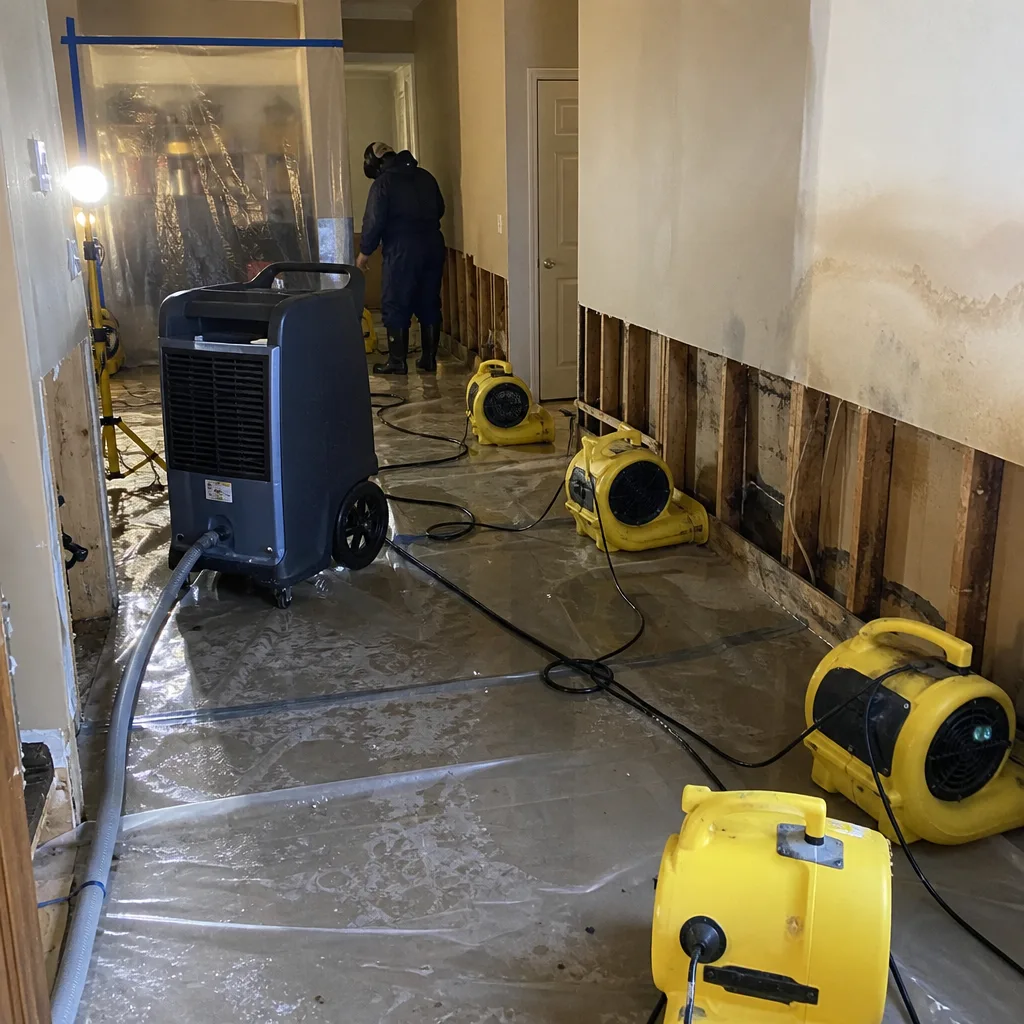
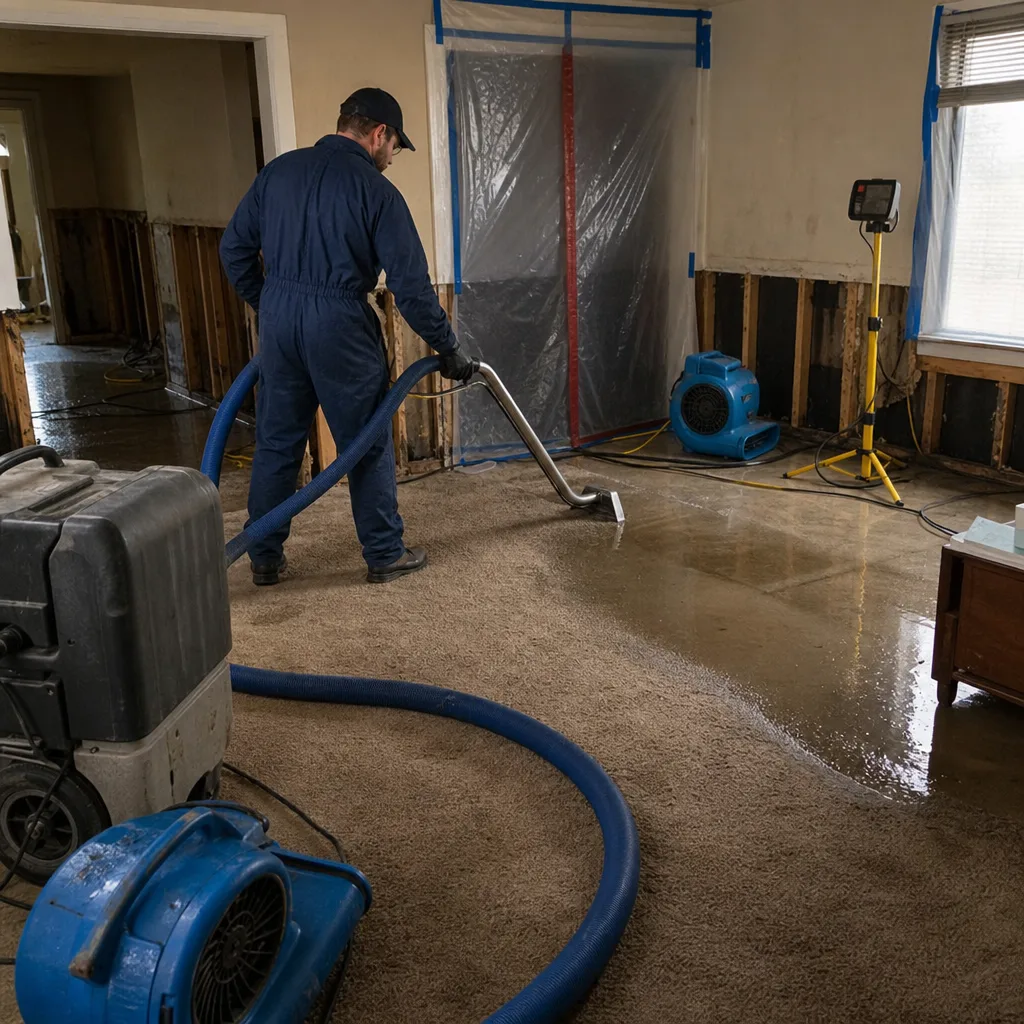
Source Removal and Structural Drying - Non-salvageable materials are removed and disposed of per New Jersey DEP requirements. Semi-porous and non-porous surfaces are cleaned with antimicrobial agents selected for the identified species. We deploy professional-grade drying systems from XPOWER and B-Air, with Injectidry systems for cavity drying where walls must be preserved, and document daily moisture readings until materials return to acceptable levels. The drying log records each reading by date, time, location, and technician name.
- 5
Clearance Testing and Documentation Delivery - Post-remediation air sampling verifies indoor spore counts at or below outdoor reference levels. We deliver your complete file: the lab reports, the photo record from every visit, the daily drying log, the signed scope, and the 365-Day Done Right Promise under The Haven Standard. This is the documentation package that satisfies insurance adjusters, real estate disclosures, and concerned homeowners who want evidence, not assurances.
How Much Does Mold Remediation Cost in Newark?
Mold remediation in Newark runs $1,200-$4,500 for most residential projects, with the majority of single-room jobs falling between $1,500 and $2,800. A contained bathroom or closet remediation with straightforward access typically costs $1,200-$1,800. Multi-room projects involving basement or crawl space work, or jobs requiring extensive drywall removal in finished spaces, range from $2,500-$4,500. Whole-house remediation with HVAC decontamination and extensive reconstruction can exceed $6,000, though these represent a small fraction of the jobs we perform.
Several factors move a project within or above these ranges. The species identified matters: Stachybotrys and other toxigenic molds require more stringent containment, longer technician time in PPE, and specialized disposal, adding 15-25% to base labor. Access difficulty is significant in Newark’s older homes - working around plaster and lath, navigating narrow staircases in converted multifamily buildings, or establishing containment in occupied apartments all extend labor hours. The extent of non-salvageable material also drives cost: a bathroom with tile-over-drywall failure requires more removal than a concrete basement with surface growth on block walls.
What we don’t do is scope-creep. Haven Standard, Clause 1 exists precisely to end that habit. The price we write is the price you pay. If we encounter concealed damage during work, we document it, photograph it, and present a revised scope for your approval before proceeding - never as an invoice surprise. We also offer a Free Second Opinion on any competitor’s written estimate. Bring another company’s scope and we’ll review it at no charge, because we’ve seen too many Newark homeowners pay for unnecessary demolition or inadequate remediation that leaves the underlying moisture source unaddressed.
Your estimate includes the inspection, lab analysis, containment setup, removal and cleaning, drying equipment, post-remediation testing, and full documentation delivery. We don’t charge separately for photo records or moisture logs - those are standard deliverables, never upsells. Call (862) 292-4268 for a written estimate with no obligation.
Mold Remediation Near Newark - Our Service Area
We perform mold remediation throughout Newark and the immediate surrounding cities, with typical response times of 45-90 minutes for inspection appointments in Harrison, Kearny, North Arlington, Bayonne, Jersey City, Secaucus, Rutherford, St. George, Hoboken, Union City, and East Rutherford. The density of northern New Jersey means we regularly work in homes with similar construction eras and moisture challenges across these markets - the pre-war brick multifamilies of Harrison, the mid-century ranches of Kearny, the converted industrial spaces along the Hudson waterfront. Our technicians are familiar with local permit requirements, DEP disposal regulations, and the specific humidity patterns that affect homes near the Passaic, Hackensack, and Hudson river corridors. Whether your property is in the South Ward, the Ironbound, or across the river in Harrison or Kearny, we apply the same documentation standards and fixed pricing protocols. You can also learn more about our full service approach on our home page or explore our dedicated Mold Remediation in Newark service details.
Serving Newark, NJ - Our Local Coverage Area
We’re based in the Newark area and know this community well. Use the map below to see our service coverage - if you’re nearby, we can almost certainly help.
Frequently Asked Questions - Mold Remediation in Newark
Mold remediation is the professional process of containing, removing, and verifying the elimination of mold growth according to industry standards like IICRC S520, while mold cleaning typically refers to surface wiping without addressing source moisture or documenting results. Remediation includes independent species identification, engineered containment to prevent spore dispersal, structural drying with logged moisture readings, and clearance testing to verify air quality restoration. The documentation produced - lab reports, photo records, drying logs - is what distinguishes professional remediation from cleaning, and it’s what insurance adjusters and real estate transactions require.
Most residential mold remediation projects in Newark are completed in 3-5 business days from initial inspection to clearance testing, though complex jobs involving multiple rooms, crawl spaces, or HVAC contamination may extend to 7-10 days. The timeline breaks down roughly as: inspection and sampling on day one, lab results and scope approval within 24-48 hours, remediation execution in 1-3 days depending on square footage, and post-remediation testing with results in 24 hours. We don’t rush drying phases to meet arbitrary deadlines - the moisture log determines when we proceed to clearance, not the calendar. Call (862) 292-4268 for a timeline estimate specific to your situation.
Most Newark residential mold remediation projects cost $1,500-$2,800 for single-room jobs and $2,500-$4,500 for multi-room or basement work, with whole-house projects occasionally exceeding $6,000. Insurance coverage depends on the cause of loss: sudden water damage from a covered peril like a pipe burst typically includes resulting mold remediation, while long-term maintenance issues or flood damage may be excluded. We document every job to insurance standards - photo records, moisture logs, written scopes - and can coordinate directly with your adjuster to present the evidence your policy requires. Our Free Second Opinion service also helps you evaluate whether a competitor’s scope addresses what your adjuster will need to see.
We work with all makes of HVAC and dehumidification equipment found in Newark homes, and we deploy our own professional-grade drying systems from XPOWER, B-Air, and Injectidry during remediation projects. The brand of your existing equipment doesn’t limit our ability to remediate mold or improve your humidity control - our technicians assess the system as part of moisture source identification and can recommend compatible upgrades or corrections to installation issues that contribute to mold risk. For permanent dehumidification solutions, we specify equipment based on your home’s cubic volume, existing duct configuration, and the psychrometric data we collect during inspection.
Mold remediation is not typically a same-day emergency like active water intrusion or sewage backup, because proper remediation requires lab analysis and scope development before work begins - rushing to tear out walls without knowing the species or moisture source often creates more problems than it solves. That said, we understand the anxiety of discovering mold, and we prioritize inspection scheduling with live phone coverage 24 hours a day, 7 days a week - no voicemail trees. Most Newark-area inspection requests are scheduled within 24 hours, and we can advise on immediate containment steps you can take safely while awaiting our arrival. For concurrent water damage emergencies, our water damage restoration team can respond immediately to stop the moisture source while mold remediation is scoped.
Every mold remediation job is covered by our 365-Day Done Right Promise under The Haven Standard: if it’s not done right, we make it right. This is a signed guarantee stamped on your job file, not a verbal assurance. The warranty covers recurrence of mold in the treated areas due to our workmanship, provided the underlying moisture source identified in our scope has been addressed. We can also provide guidance on maintenance and humidity control to protect your investment, though warranty coverage requires that occupant behavior and building maintenance not reintroduce the moisture conditions that caused the original growth.
You don’t need to clean, bleach, or disturb visible mold before our arrival - doing so can actually spread spores and make our assessment more difficult. Gather any documentation of past water damage, repairs, or insurance claims related to the affected area, and note when you first observed the issue and whether symptoms correlate with seasons or HVAC use. We’ll need access to the affected space, adjacent rooms, and any crawl spaces, basements, or utility areas that might relate to the moisture source. The inspection itself takes 1-2 hours for most Newark homes, and you’ll receive your written scope and fixed price within 24 hours of sample collection - Haven Standard, Clause 1. Call (862) 292-4268 to schedule.
Schedule Your Mold Remediation Service in Newark Today
Call (862) 292-4268 now to speak with a live person - no voicemail, no callback queues. We’ll schedule your inspection, deliver a written price before any work begins, and document every phase of your remediation with the photo records and moisture logs that turn restoration invoices into payable claims. Your estimate is free, your scope is fixed, and your work is backed by The Haven Standard and our 365-Day Done Right Promise. Alicia Brennan built this company on the documentation gap that costs homeowners their coverage fights. We’re here to close it for you.
Written by Alicia Brennan, Owner at DryMark Restoration Newark, serving Newark and northern New Jersey since 2011.